&geometry(180x112) "Great Western Animal Hospital")
Senior Pet Health Checks: What Tests Are Reccomended and Why?
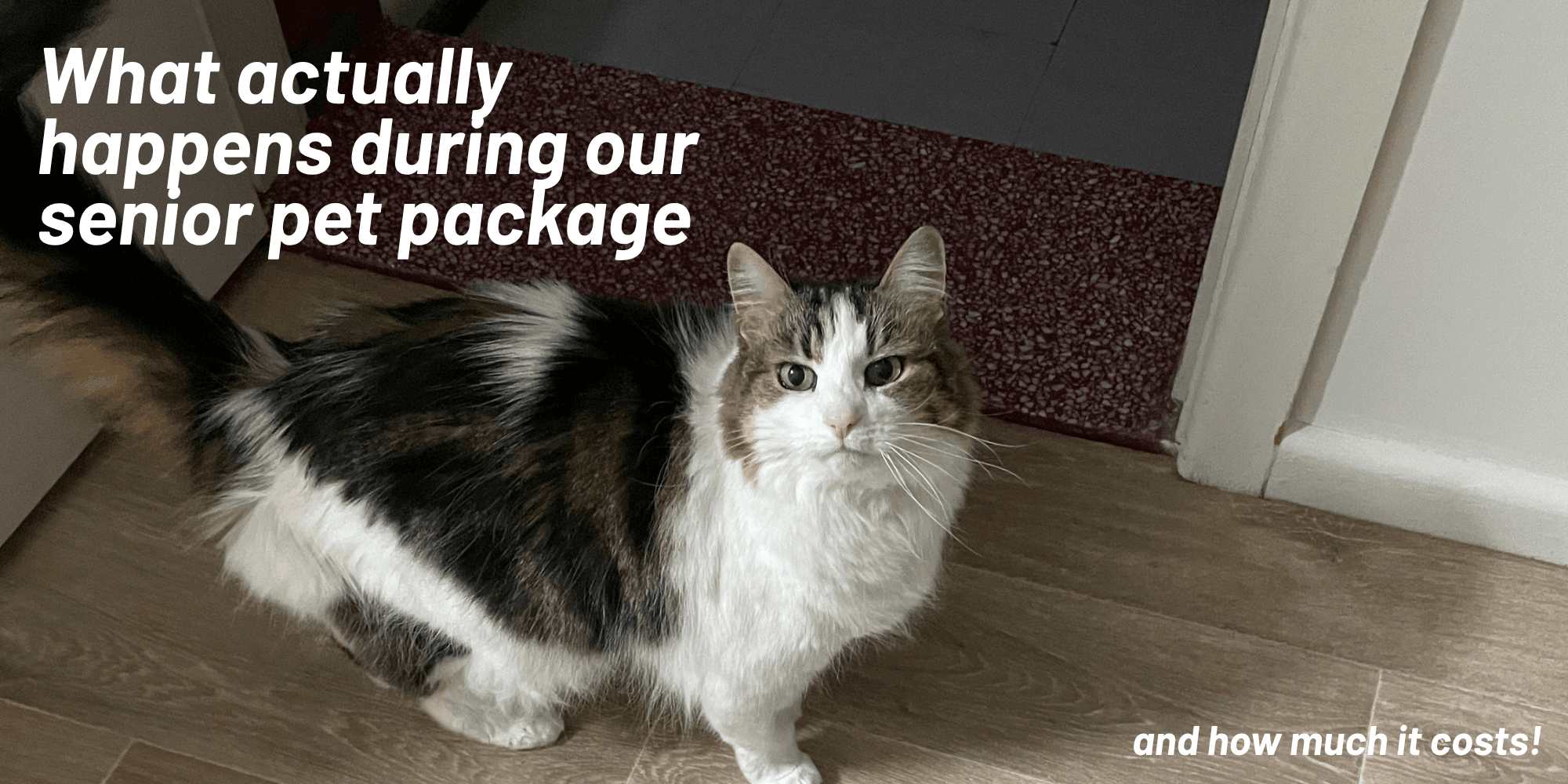 "Senior Pet Health Checks: What Tests Are Reccomended and Why?")
She still eats. She still wags. She has just slowed down a bit, and you have put it down to age.
A senior pet health check can uncover changes that are not yet visible at home. Your dog may still eat, play and wag their tail, while early kidney disease, high blood pressure or arthritis is beginning quietly.
That is the part worth knowing: by the time a senior pet looks unwell, the problem has usually been there a while. Most of what we find in a senior health check is invisible from the outside. It shows up in the blood, in the urine, and in a blood pressure reading, months before it shows up in the lounge room.
Here is exactly what happens in one of our senior checks, what each test is looking for, what it costs, and what we do if we find something.
Finding a change does not automatically mean invasive treatment. Often, it simply gives us the opportunity to adjust a diet, begin medication or monitor your pet more closely.
What counts as a senior pet?
For most dogs and cats, we start senior screening at around 10 years old.
Large and giant breed dogs get there earlier. A Great Dane at seven is doing what a Jack Russell does at eleven, and waiting until double figures with a big dog wastes years.
| Life stage | Most dogs and cats | Large and giant breed dogs |
|---|---|---|
| Senior | From around 10 | Earlier, from around 7 |
| Geriatric | From around 14 | From around 10 |
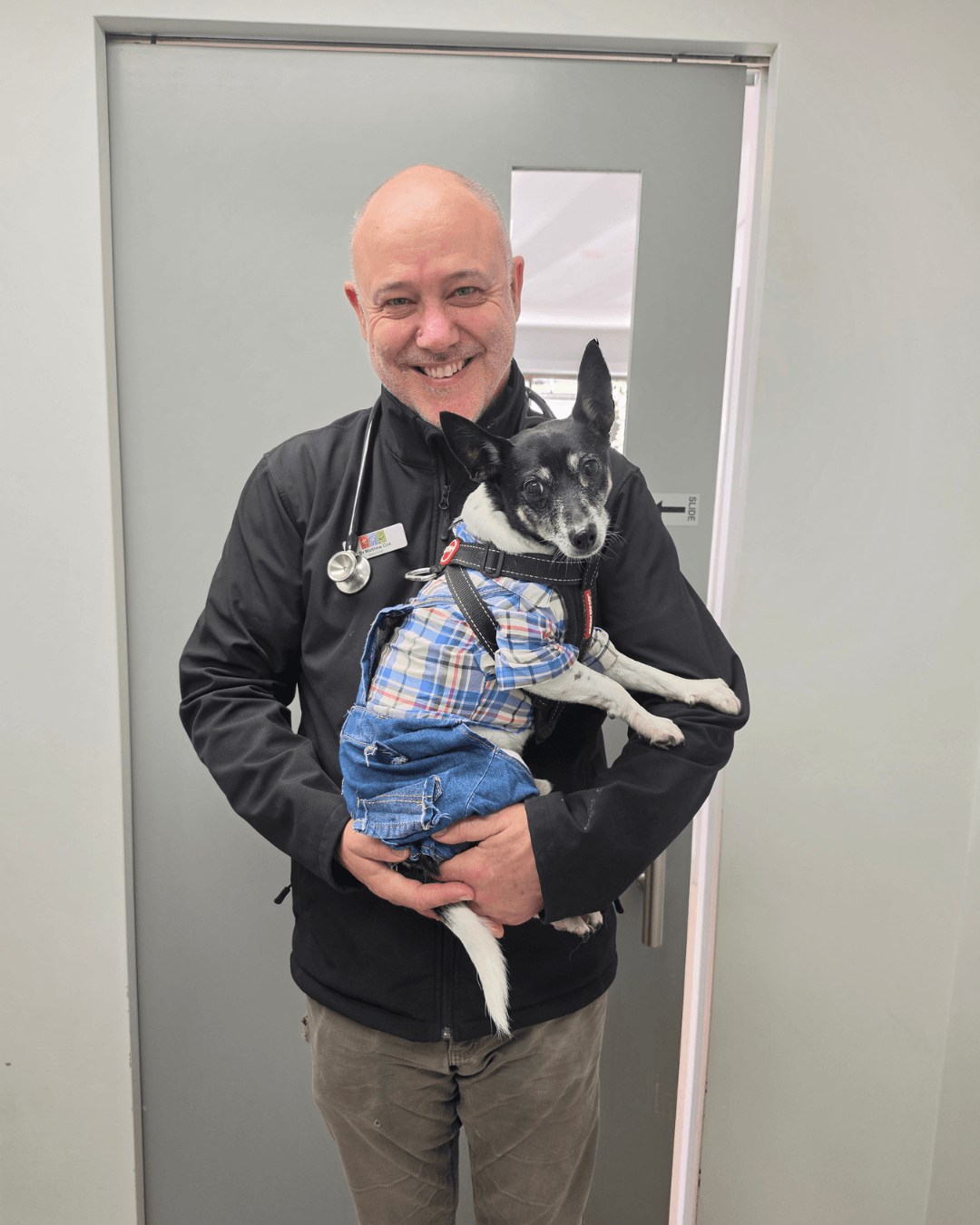
Dr Matt with Pisco in for his arthritis injection
Why bother if my pet seems fine?
Because "seems fine" is not a diagnostic.
Kidney disease, high blood pressure, early arthritis and thyroid problems are all common in older pets, and all of them are quiet at the start. A cat can lose a large amount of kidney function before you notice a single symptom. High blood pressure can damage the eyes before anyone sees a change in behaviour.
The point of screening a senior pet who "seems fine" is that we are not looking for a sick animal. Many conditions affecting older pets begin quietly, and screening can help us identify them before they become more difficult or costly to manage.
Take Misty, a 13-year-old cat from Greystanes. Her owner brought her in thinking she was just sleeping a bit more, which is easy to put down to age. Her physical exam and blood test came back looking great, but her urine test picked up the earliest signs of kidney changes, well before she was showing anything at home. At this stage, all Misty needed was a diet change and regular monitoring. That good result was only possible because she was checked while she still appeared well during her six-monthly health check.
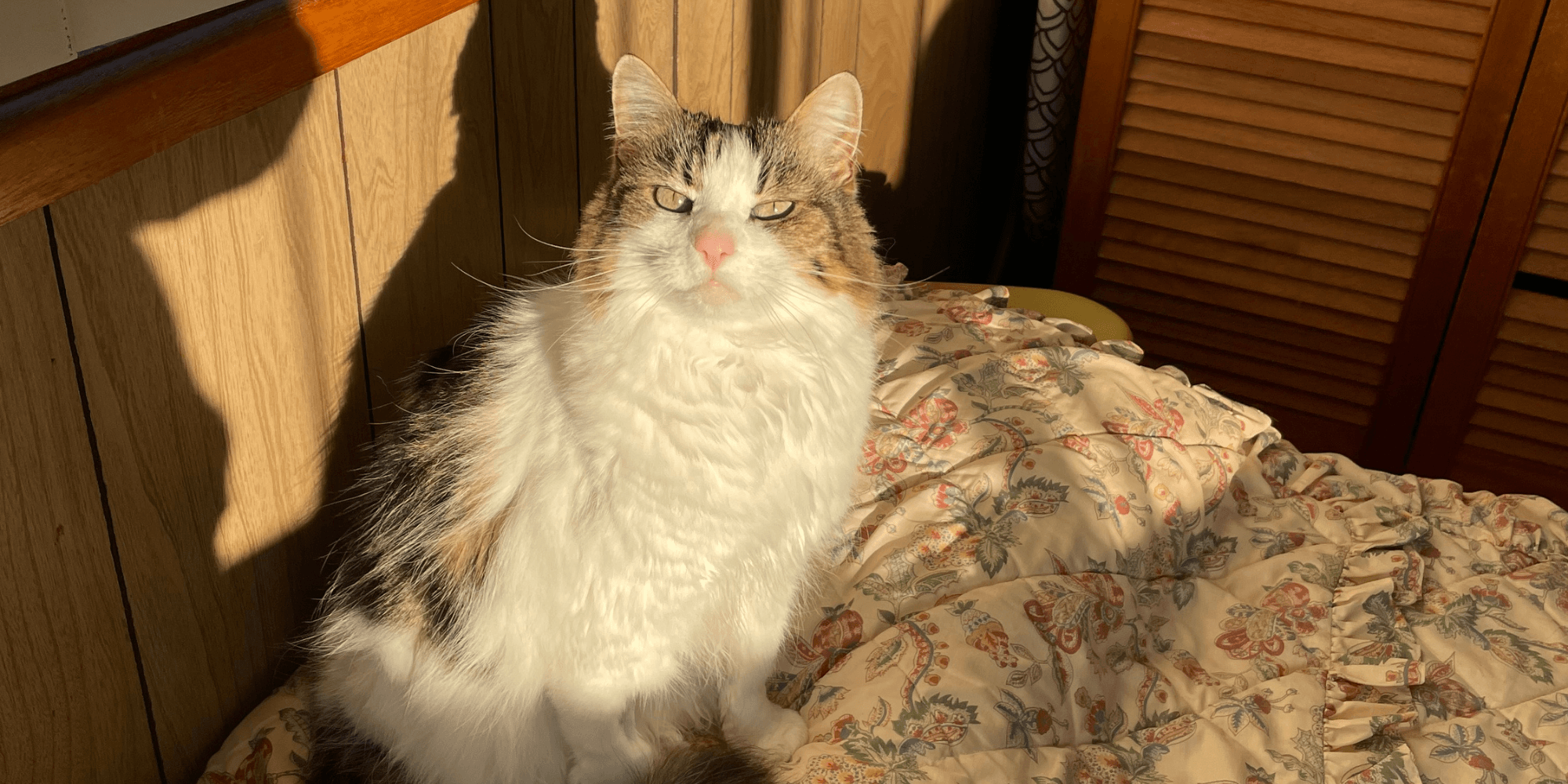
Misty, a 13-year-old cat from Greystanes who caught her kidney disease early through her senior health check.
First: 30 minutes with a nurse
Your appointment starts with a half hour nurse consult. This is not a quick weigh-in.
The nurse weighs your pet and checks their body condition before completing the tests.
We allow 30 minutes because senior pets often need a slower approach and more handling breaks.
Come ready to talk about: what your pet is drinking, what they are eating, whether they still jump onto the couch or the bed, how they are sleeping, and whether anything at all has changed in the last six months. Even the things you think are silly. Especially those.
What we test, and what each test is actually looking for
The comprehensive senior blood test
The blood test assesses red and white blood cells, kidney and liver function, blood sugar and other important health markers. In senior cats, it also includes thyroid testing.
In older cats, an overactive thyroid is one of the most common problems we see, and untreated it will damage the heart. In older dogs and cats, kidney values give us the earliest warning we have of a disease that is far more manageable when caught early than late.
The urine test
Blood tells us one half of the kidney story. Urine tells us the other half, and often gets there first.
It also picks up urinary tract infections, which older pets get more often and complain about less, and gives us early signals for diabetes.
Where possible, we may ask you to bring a fresh urine sample from home. If you cannot collect one, do not worry. We can discuss the most suitable way to obtain one during the appointment.
Blood pressure
We use a Doppler, which is the same principle as a blood pressure cuff on you, sized for a paw or a tail.
High blood pressure in senior pets is common, often sits alongside kidney disease or thyroid disease, and is genuinely dangerous. In cats it can cause sudden blindness. It is also, once we know about it, very treatable.
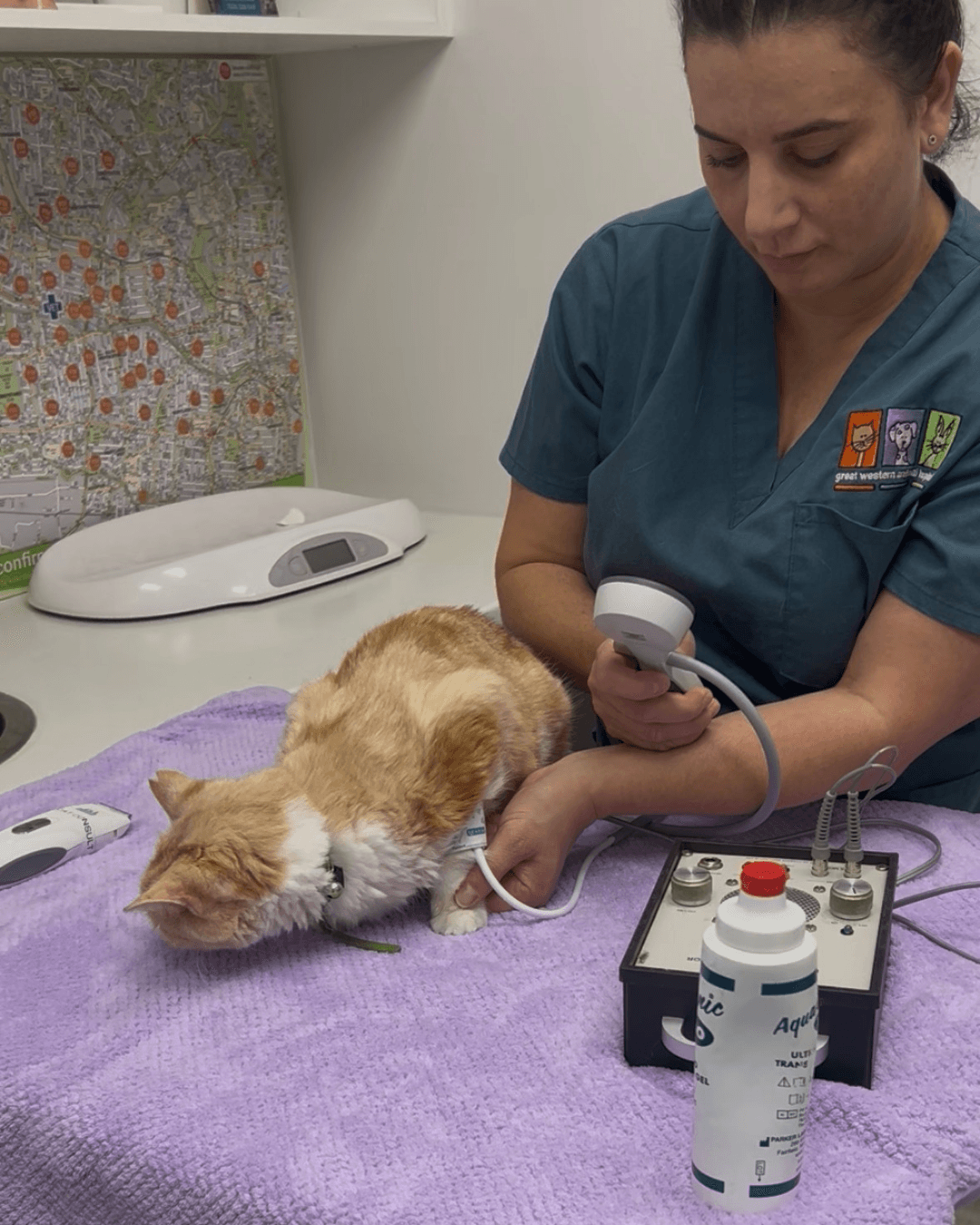
Nurse Jodie taking a blood pressure using a doppler on Bella the cat
Eye pressure testing
Eye pressure testing, also called tonometry, can pick up raised pressure inside the eye, which is glaucoma. Glaucoma is a painful condition, and animals rarely tell us when they are in pain. They just get quieter.
The test itself takes seconds and pets barely notice it.
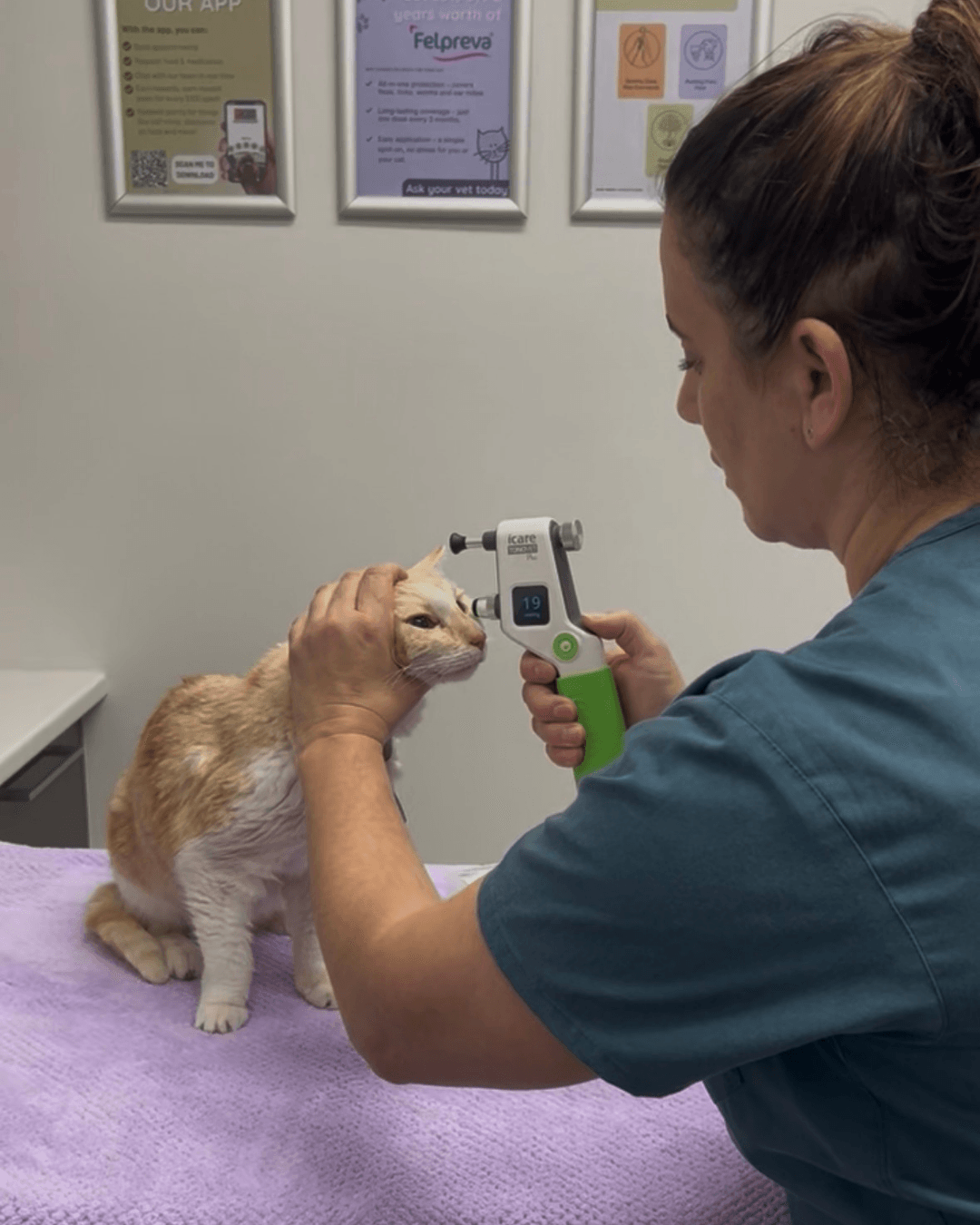
Nurse Jodie taking an eye pressure with our tonometer on Bella the cat.
Not sure if your pet is due? Give us a ring on 02 9631 9322 and we will tell you straight. If a check is not warranted yet, we will say so.
Then: 15 minutes with the vet
Once the testing is done, your pet sees the vet for a full physical examination: heart, lungs, abdomen, joints, teeth, lumps, eyes, ears, skin.
The vet has your history and your test results in front of them by this point. That is the whole design of the appointment. Instead of a vet meeting your pet cold and guessing, they walk in already knowing what the blood is doing.
How much does a senior pet care package cost?
The Senior Pet Care Package is $395.
Bought separately, the same tests and consults come to $797. So the package saves you $402.
It's running from 15 July to 31 August, Monday to Friday, 9am to 5pm. We keep it to weekdays because it needs a nurse appointment as well as a vet, and our nurse appointments run during the week.
Spots are limited and they do go.
What happens if we find something
We talk to you before anything else happens.
You get the results explained in plain English, a clear picture of what they mean, and the options with the costs attached. Nothing goes ahead without you agreeing to it.
Sometimes a senior check identifies a problem that may require a procedure. Being older does not automatically make a pet unsuitable for anaesthesia. We assess each pet individually and use modern monitoring, intravenous fluids and tailored pain relief to reduce risk.
Frequently asked questions
How long does a senior health check take?
About 45 minutes in total: 30 minutes with a nurse, then 15 minutes with a vet. Allow a bit longer if your pet is anxious, because we will not rush them.
Does my pet need to fast beforehand?
No, no need to fast. If you want to refrain from giving them their breakfast so they are more likely to be hungry for some treats, you can, though!
Can I book a senior health check on a Saturday?
Not for the package. It needs a nurse appointment as well as a vet consult, and our senior package appointments run Monday to Friday, 9am to 5pm.
What if my pet hates the vet?
Tell us when you book and we will plan around it. Senior pets are often sore as well as scared, and a pet who used to cope fine may not cope now.
What if you find something, will it cost more?
Possibly, and we will tell you exactly what before anything goes ahead. Most of what we find at this stage is managed with medication, diet or monitoring, not surgery.
Book before 31 August
Many conditions affecting older pets begin quietly, and screening gives us the best chance of identifying them before they become more difficult or costly to manage.
The Senior Pet Care Package is $395, saves you $402, and runs until 31 August. Book a senior package online or call us on 02 9631 9322. We are on the Great Western Highway at Pendle Hill, and we see pets from Wentworthville, Greystanes and Pemulwuy every day.
| Tags:Proactive Pet CareDogHealth AdviceCat |
Check Out Our
Recent Articles
- Tinsel Went Blind. His Blood Pressure Was 280.
- Senior Pet Health Checks: What Tests Are Reccomended and Why?
- 5 Signs Your Pet's Upset Stomach Needs a Vet Check
- Feline Leukaemia Virus in Cats: Symptoms, Testing and Prevention (Sydney...
- Cat Flu in Cats: Symptoms, Treatment and Prevention (Sydney Vet Guide)