&geometry(180x112) "Great Western Animal Hospital")
5 Signs Your Pet's Upset Stomach Needs a Vet Check
 "5 Signs Your Pet's Upset Stomach Needs a Vet Check")
It's 2am, your dog or cat has just been sick for the third time, and you're wondering whether this is something to sleep on or something to act on right now. It's one of the most common situations pet owners face, and the good news is that most tummy upsets are mild and settle down within a day or so on their own.
But not always. There are a handful of signs that tell us an upset stomach has moved from "let's keep an eye on it" to "this needs a vet visit." Because dogs and cats don't always show illness the same way, we've covered both in this guide.
Why Do Dogs and Cats Get Upset Stomachs?
Vomiting and diarrhoea are common symptoms with a wide range of causes, from something as simple as a sudden diet change or eating something they shouldn't have to stress, parasites, infections, or, in less common cases, something more serious. Most of the time the cause is minor and resolves quickly.
One important difference between the two species is that cats are naturally very good at hiding illness. In the wild, showing weakness makes them vulnerable, so many cats will continue to act relatively normal even when they're feeling quite unwell. This means the signs below are worth taking seriously in cats even if your cat still seems fairly bright.
The 5 Signs Your Pet Needs to See a Vet
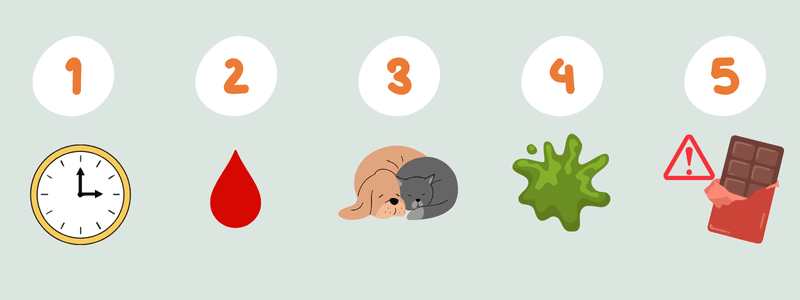
1. It's Lasted More Than 24 to 48 Hours
A single vomit or one loose stool usually isn't cause for alarm. But if vomiting or diarrhoea continues beyond a day or two, it's time to get your pet checked. For puppies and kittens, this window is shorter. Young animals dehydrate much faster than adults, so we recommend having them seen sooner rather than waiting the full 24 to 48 hours.
2. There's Blood in the Vomit or Stool
Blood can appear as bright red streaks or give vomit or stool a darker, almost black appearance. Either version is a reason to book a vet visit rather than wait it out at home, as it can point to irritation, inflammation, or other issues that need attention.
3. Your Pet Is Lethargic or Won't Eat
A dog or cat that's flat, withdrawn, hiding, or showing no interest in food alongside vomiting or diarrhoea needs to be seen. This is especially important in cats. A cat that hasn't eaten for even a day or two can develop additional health complications on top of the original problem, so reduced appetite in cats should never be left too long.
4. Repeated Vomiting or Can't Keep Water Down
If your pet is vomiting repeatedly, or can't even keep water down, dehydration can set in quickly. This is one of the clearer signs that home monitoring isn't enough and a vet visit is needed.
5. Known Access to Something Toxic or Foreign
If your pet has gotten into chocolate, certain plants, human medication, or has possibly swallowed something like a toy, sock, or bone fragment, don't wait for symptoms to develop or worsen. Call us straight away, even if your pet seems fine right now.
Signs That Are More Urgent in Cats Specifically
Because cats hide illness so well, a few things that might seem minor in a dog deserve quicker attention in a cat. Not eating for more than 24 hours, hiding more than usual, or noticeable weight loss over a short period are all worth a vet check sooner rather than later, even without dramatic symptoms. Trust your instincts here. You know your cat's normal behaviour better than anyone.
What You Can Do at Home for Mild Cases
If your pet is otherwise bright, drinking water, and only had a single vomit or one loose stool, a short period of home monitoring is reasonable. Offering small amounts of water frequently, keeping food simple and easily digestible, and giving their gut a rest can help. If things haven't improved within 24 to 48 hours, or if any of the signs above appear, it's time to call us rather than continue waiting.
We'd always rather you call and ask than guess. If you're ever unsure, get in touch and one of our team can help you work out whether a visit is needed.
Common Questions
How long is too long for diarrhoea or vomiting in dogs and cats?
As a general guide, 24 to 48 hours. Puppies, kittens, and senior pets should be seen sooner, as they're more prone to dehydration.
What settles an upset stomach quickly?
For mild cases, small amounts of water and a bland, easily digestible diet can help settle things. If symptoms persist or worsen, it's best to have your pet checked rather than continue home care.
Is it normal for cats to hide when they're unwell?
Yes, it's a natural instinct for cats to hide signs of illness. This is exactly why reduced appetite, hiding, or lethargy should be taken seriously in cats even without other obvious symptoms.
When in Doubt, Get It Checked
Most upset stomachs in pets are short-lived and nothing to worry about. But when one of the signs above shows up, it's always better to have your dog or cat checked than to wait and hope it passes. Our team at Great Western Animal Hospital is here to help, whether that's a quick phone chat to talk through what you're seeing or a same-day appointment.
You can book online through our online booking system or call us on 02 9631 9322.
Check Out Our
Recent Articles
- Tinsel Went Blind. His Blood Pressure Was 280.
- Senior Pet Health Checks: What Tests Are Reccomended and Why?
- 5 Signs Your Pet's Upset Stomach Needs a Vet Check
- Feline Leukaemia Virus in Cats: Symptoms, Testing and Prevention (Sydney...
- Cat Flu in Cats: Symptoms, Treatment and Prevention (Sydney Vet Guide)