&geometry(180x112) "Great Western Animal Hospital")
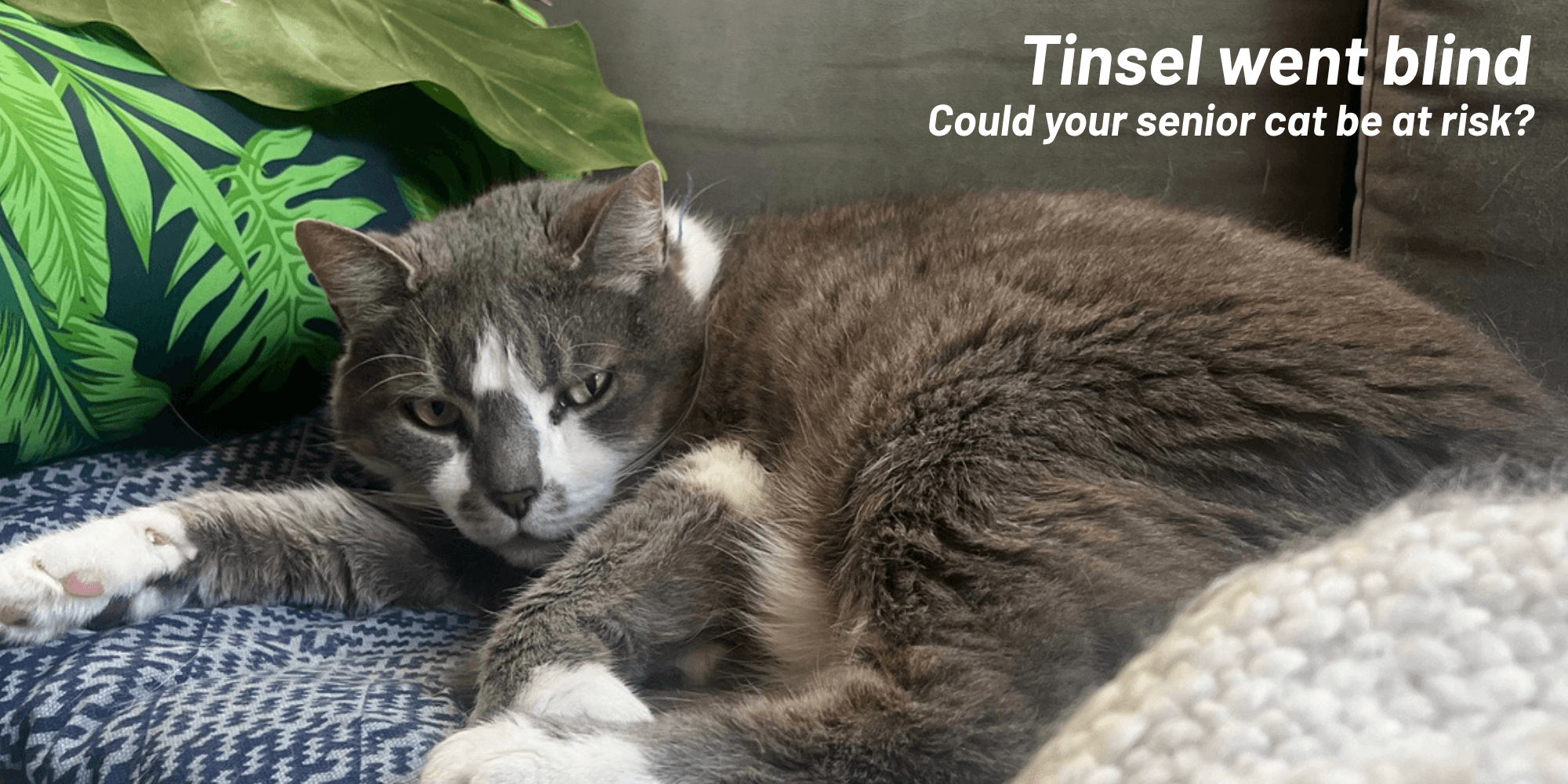
Tinsel Went Blind. His Blood Pressure Was 280.
 "Tinsel Went Blind. His Blood Pressure Was 280.")
Tinsel started walking into things.
His owner noticed him bumping into doorframes and becoming less confident moving around the house. Then, one morning, she saw blood inside one of his eyes.
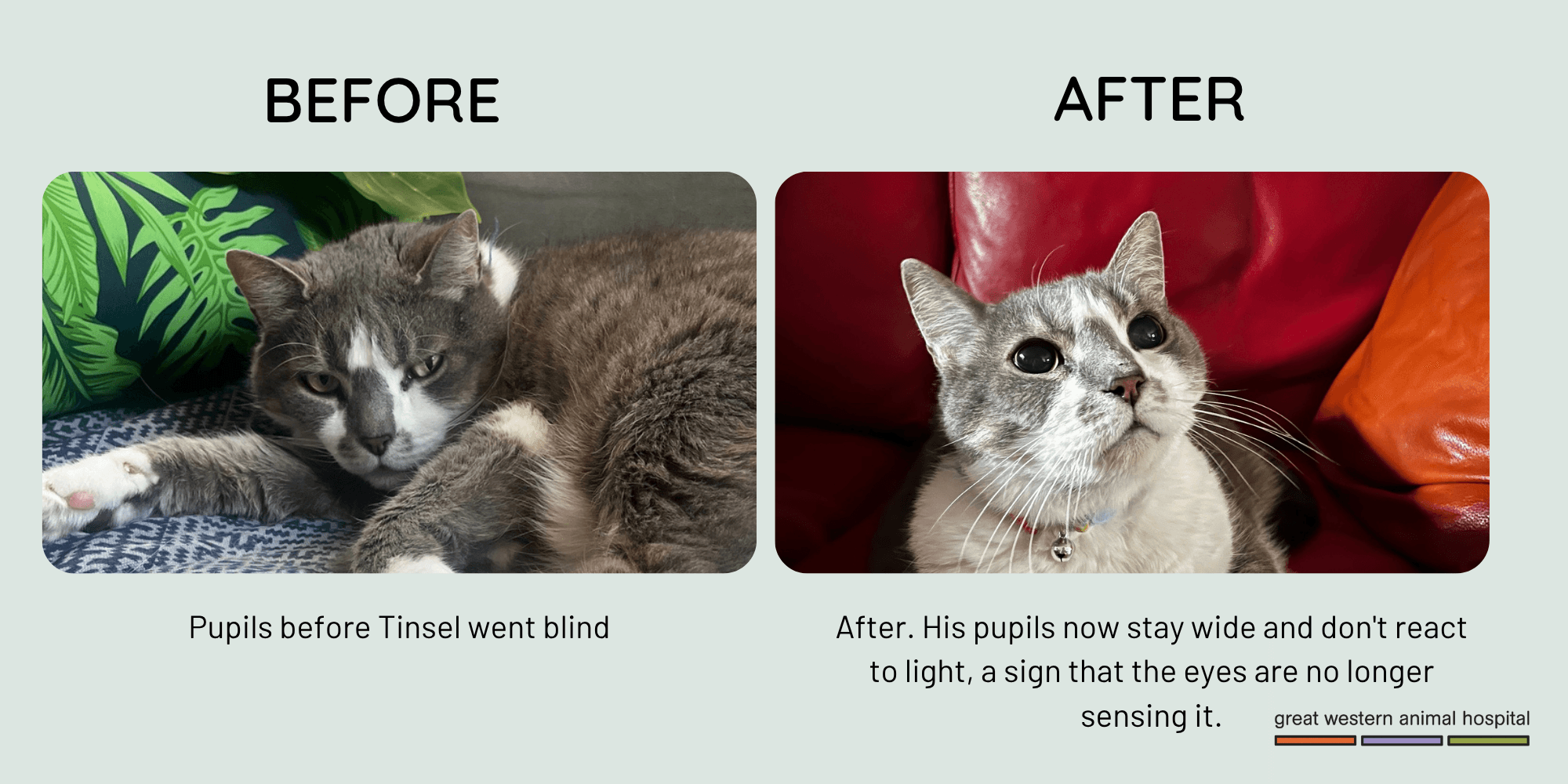
By the time we met Tinsel, he had been unable to see for several months.
Sudden vision loss is not a normal part of ageing. It usually has an underlying medical cause and needs veterinary attention. One important cause in older cats is high blood pressure, also known as hypertension.
Tinsel’s systolic blood pressure was 280.
Here is what happened to him, how high blood pressure can damage a cat’s eyes and why routine blood pressure checks matter.
What happened to Tinsel
Tinsel is a grey and white domestic shorthair who came to us at sixteen years old.
His owner had noticed his vision worsening over several months. When she saw blood pooling inside one of his eyes, she booked him in straight away.
The bleeding inside his eye is called hyphema. In an older cat, this can be a warning sign of high blood pressure, so we measured Tinsel’s blood pressure.
His systolic reading was 280.
A normal systolic blood pressure reading in a cat is generally below 140. Readings that remain above 160 are associated with an increased risk of damage to organs such as the eyes, kidneys, heart and brain.
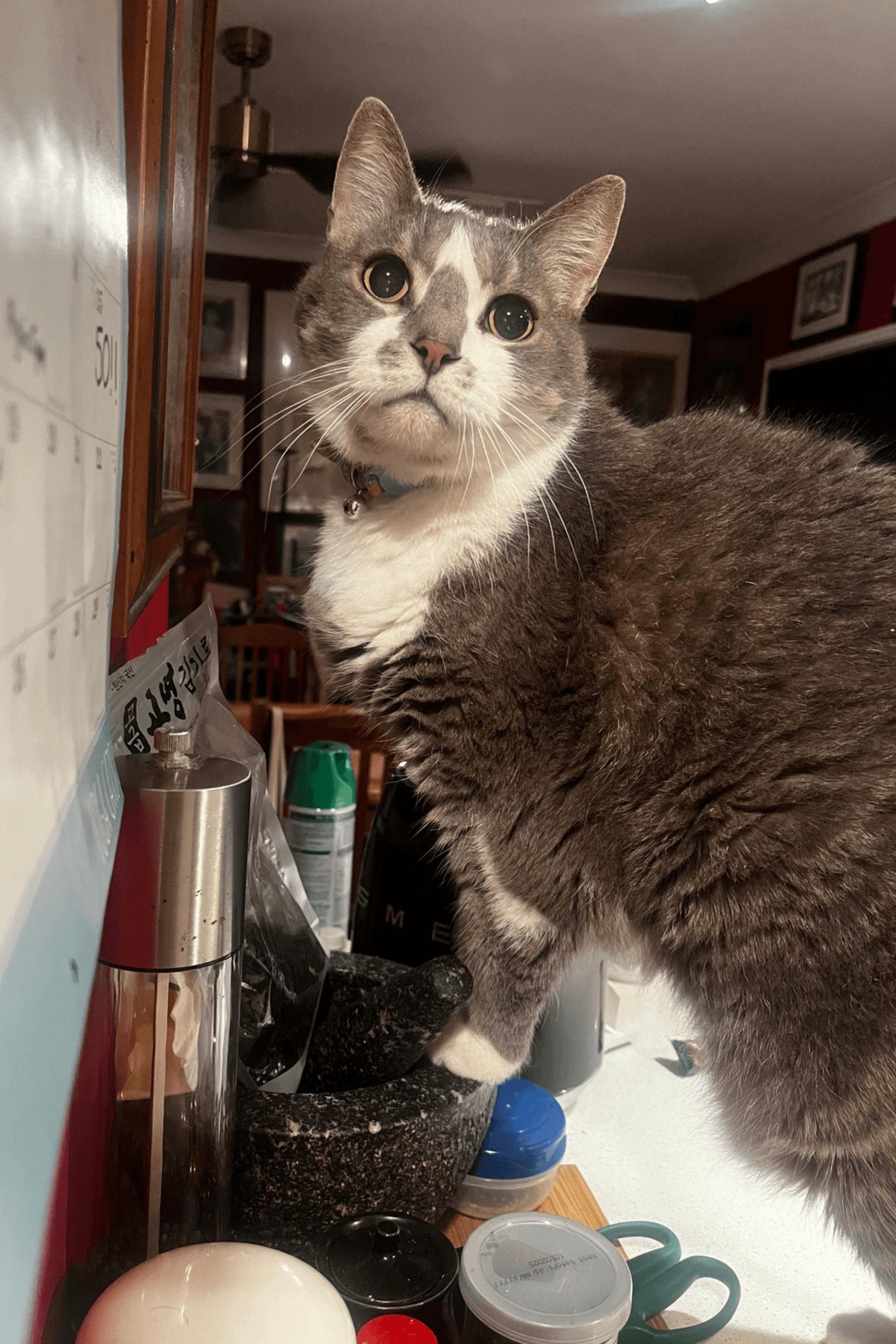
At 280, Tinsel’s blood pressure was severely elevated. Unfortunately, the delicate blood vessels inside his eyes had already been damaged.
| Systolic reading (mmHg) | What it means |
|---|---|
| Under 140 | NormalHealthy range |
| 140 to 159 | BorderlineLow risk of organ damage |
| 160 to 179 | HighModerate risk of organ damage |
| Above 179 Tinsel: 280 | Severely highHigh risk of organ damage |
Measured in millimetres of mercury (mmHg). A single high reading is not a diagnosis on its own, which is why we take several and look at them together.
How can high blood pressure cause blindness?
The back of the eye contains tiny, fragile blood vessels that supply the retina.
The retina is the light-sensitive layer that allows a cat to see. When blood pressure remains very high, these blood vessels can leak or bleed. Fluid may also build up beneath the retina, causing it to lift away from the back of the eye.
This is called a retinal detachment.
When hypertension is detected and treated quickly, some eye changes may improve and some cats may regain part or all of their sight. However, recovery becomes much less likely once the damage has been present for longer.
The difficulty is that high blood pressure often causes no obvious signs in its early stages. Cats also adapt extremely well as their vision changes, especially inside a familiar home.
Routine blood pressure screening gives us the best chance of finding hypertension before permanent damage occurs.
What caused Tinsel’s high blood pressure?
In older cats, high blood pressure is often linked to another medical condition, such as chronic kidney disease or an overactive thyroid.
Tinsel was tested for these conditions, but his kidney results were reassuring and his thyroid result made hyperthyroidism unlikely.
His results did show severe hypertension and low potassium, which raised suspicion for a less common hormonal condition called hyperaldosteronism.
Confirming this would have required further blood testing and an ultrasound. Tinsel’s owner chose not to pursue those tests, so the condition could not be diagnosed with certainty.
Instead, Tinsel was treated based on the most likely cause, his blood pressure was monitored closely and he responded well.
The important lesson is not that every owner needs to worry about a rare hormonal disease. It is that we cannot tell whether a cat has high blood pressure simply by looking at them.
The only way to know is to measure it.
Signs owners may mistake for old age
Many signs of vision loss or hypertension can look like ordinary ageing.
These may include:
- bumping into furniture or misjudging jumps
- hesitating in doorways or near stairs
- pupils that remain large in bright light
- pacing, confusion or unusual vocalisation
- becoming less active or less interested in normal activities
Cats can hide vision loss surprisingly well because they rely on memory, smell and their whiskers to move around.
None of these signs proves that a cat has high blood pressure. However, they should not automatically be dismissed as old age.
What does a blood pressure check involve?
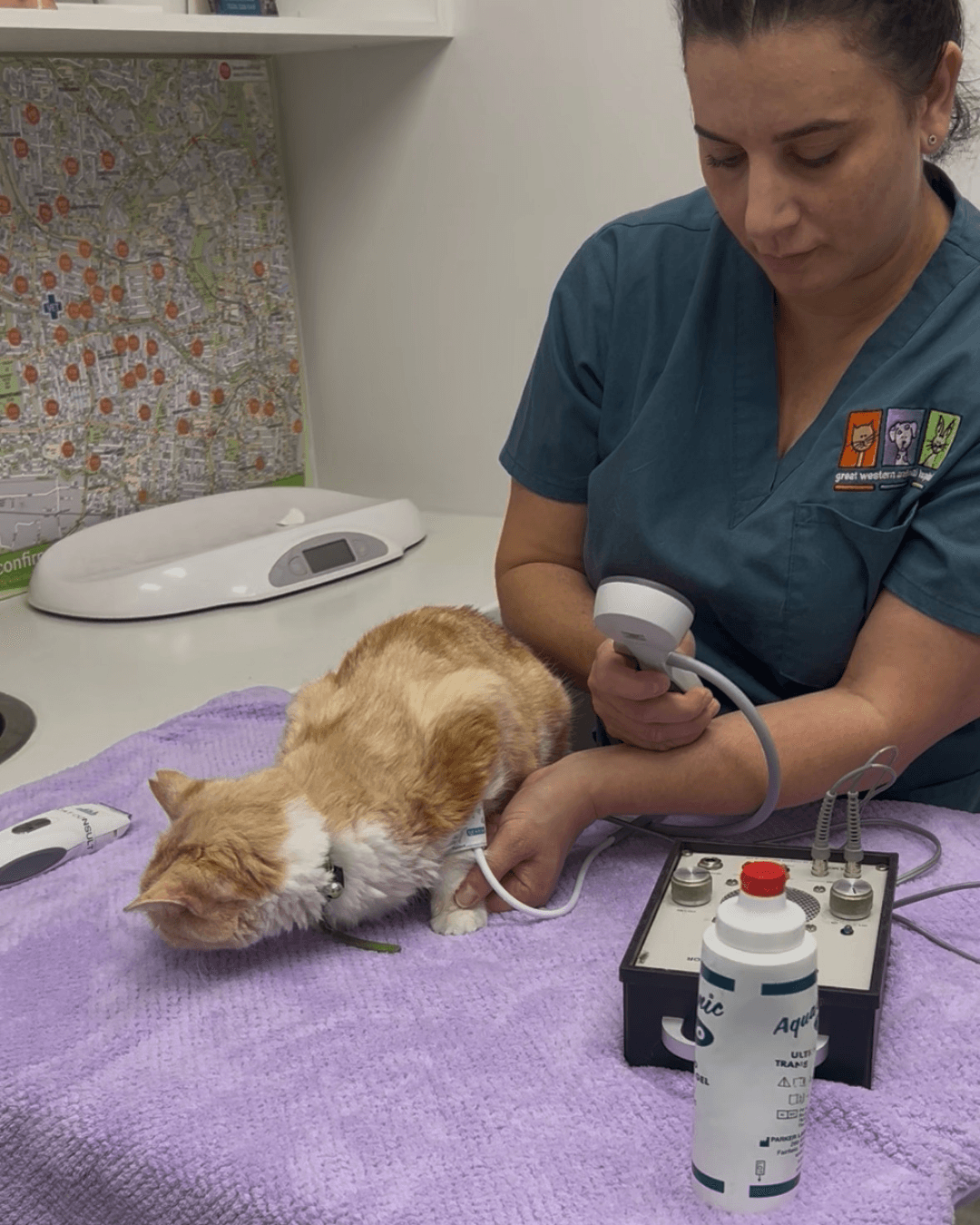
A cat’s blood pressure check is very similar to the process used in people.
A small inflatable cuff is placed around the leg or the base of the tail. Several readings are then taken while the cat sits or lies in a comfortable position.
There are no needles, and the cuff should not hurt. The process usually takes around five to ten minutes.
Cats can temporarily raise their blood pressure when they are nervous, so we allow them time to settle and take several readings rather than relying on one number.
We also consider their behaviour, medical history and examination findings before deciding whether a reading is significant.
Where is Tinsel now?
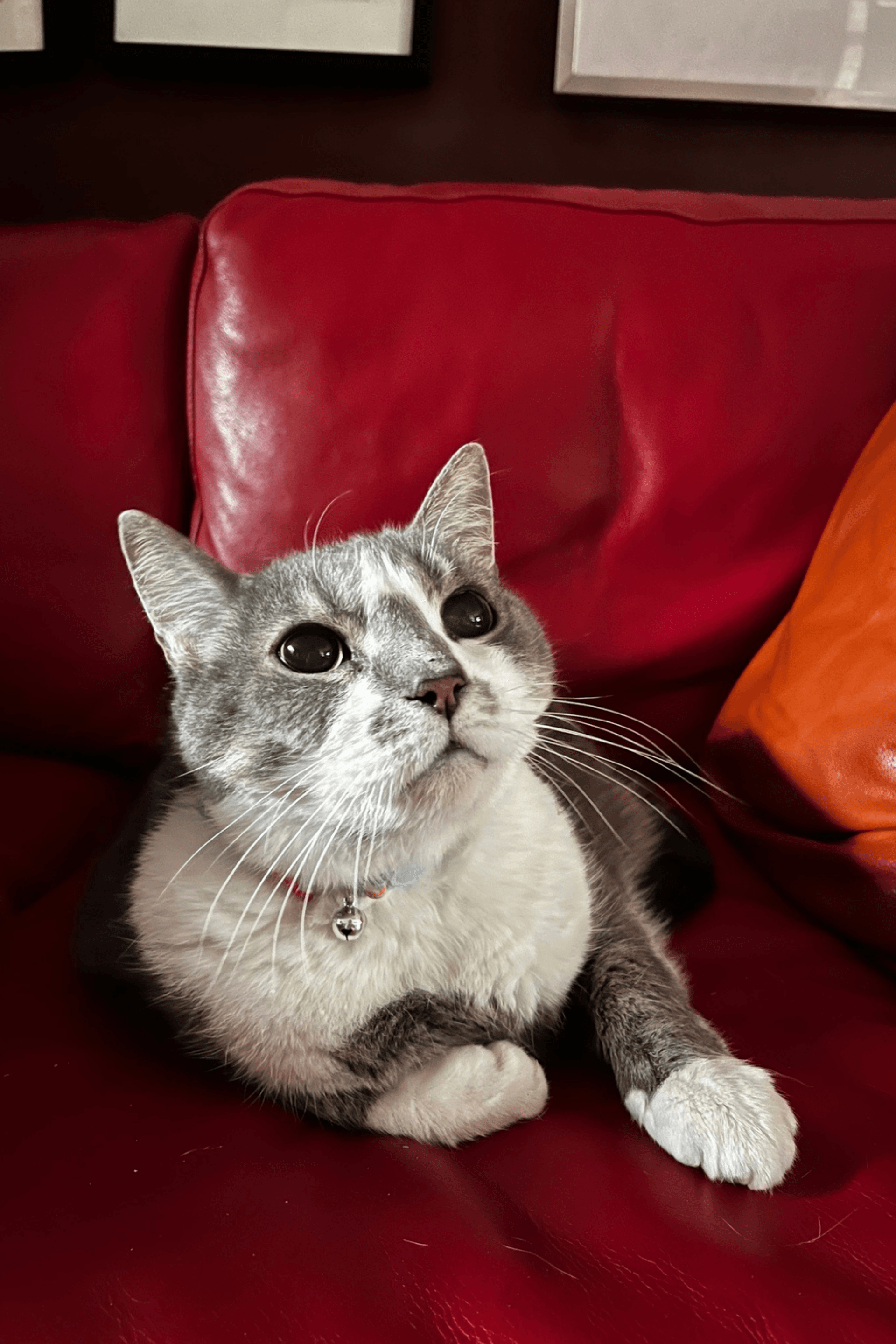
Tinsel is now nearly seventeen.
Once treatment began, his blood pressure came down quickly. Within a couple of weeks, his systolic reading had fallen from 280 to 130, and it has remained well controlled.
He takes daily medication and returns for regular blood pressure monitoring.
At home, Tinsel is still very much himself. He eats well, enjoys sitting in the sun and moves confidently around his familiar environment despite being unable to see.
Tinsel is permanently blind because the damage to his eyes could not be reversed by the time his hypertension was diagnosed.
That does not mean anyone failed him. His high blood pressure had caused no clear warning signs until the damage was already advanced.
Tinsel has adapted beautifully and continues to enjoy a happy life. Our hope is that sharing his story encourages more owners to consider blood pressure screening before their cat shows obvious signs that something is wrong.
Should my senior cat have a blood pressure check?
Blood pressure screening becomes increasingly important as cats get older.
We particularly encourage owners of cats aged ten and older to discuss annual blood pressure screening with their veterinary team. Cats with kidney disease, thyroid disease or other risk factors may need to be checked more often.
If your cat is getting older, has recently changed their behaviour or has never had their blood pressure measured, speak with our team.
A few quiet minutes spent checking their blood pressure may identify a serious problem long before your cat can show you that anything is wrong.
Senior Pet Care Package
Our Senior Pet Care Package is currently available for $395, saving more than $400 compared with booking each service separately.
It includes a comprehensive blood test, urine testing, blood pressure screening, eye pressure testing and a senior veterinary health assessment.
Appointments for our Senior Package are available Monday to Friday between 8 am and 5 pm. Ends August 31st 2026
Book online or call us on 02 9631 9322.
This article provides general information and is not a substitute for veterinary advice about your own cat. Sudden vision loss, blood inside the eye, seizures or significant changes in behaviour require prompt veterinary attention.
| Tags:Proactive Pet CareCatClient Information |
Check Out Our
Recent Articles
- Tinsel Went Blind. His Blood Pressure Was 280.
- Senior Pet Health Checks: What Tests Are Reccomended and Why?
- 5 Signs Your Pet's Upset Stomach Needs a Vet Check
- Feline Leukaemia Virus in Cats: Symptoms, Testing and Prevention (Sydney...
- Cat Flu in Cats: Symptoms, Treatment and Prevention (Sydney Vet Guide)