&geometry(180x112) "Great Western Animal Hospital")
Why Do Small Dogs Have Such Bad Teeth? Meet Hildy
 "Why Do Small Dogs Have Such Bad Teeth? Meet Hildy")
“
Think your little dog's teeth are fine because they're young?
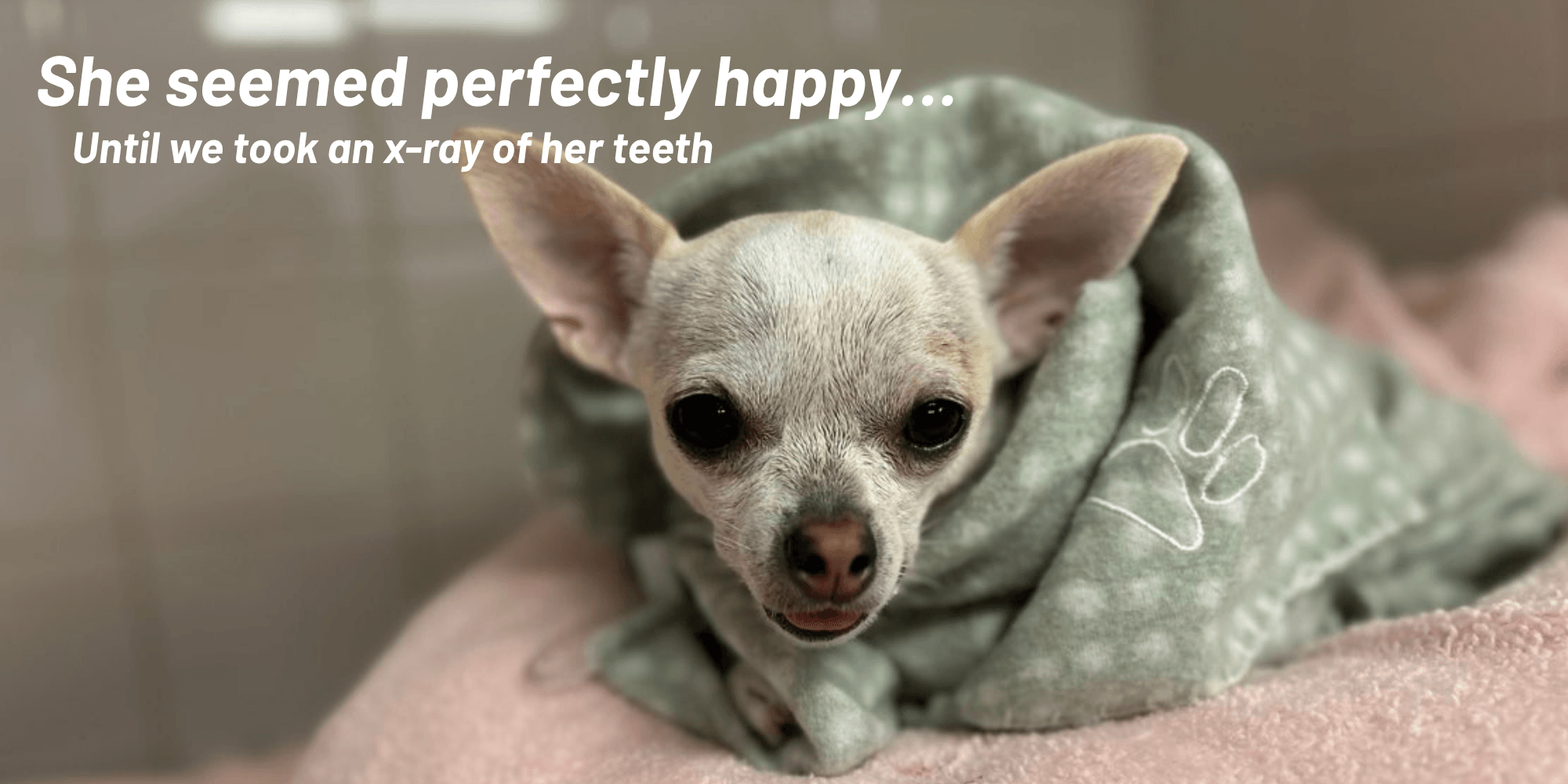
Meet Hildy. She's a 3.5-year-old Chihuahua — bright, bouncy, and very loved. She's also just had multiple teeth removed.
If that surprises you, you're not alone. Most owners of small breeds have no idea their dog is quietly developing serious dental disease, often years before anyone notices. Hildy's story is a perfect (and very cute) example of why.
Book your dog's Dental Month check before 30 June ?
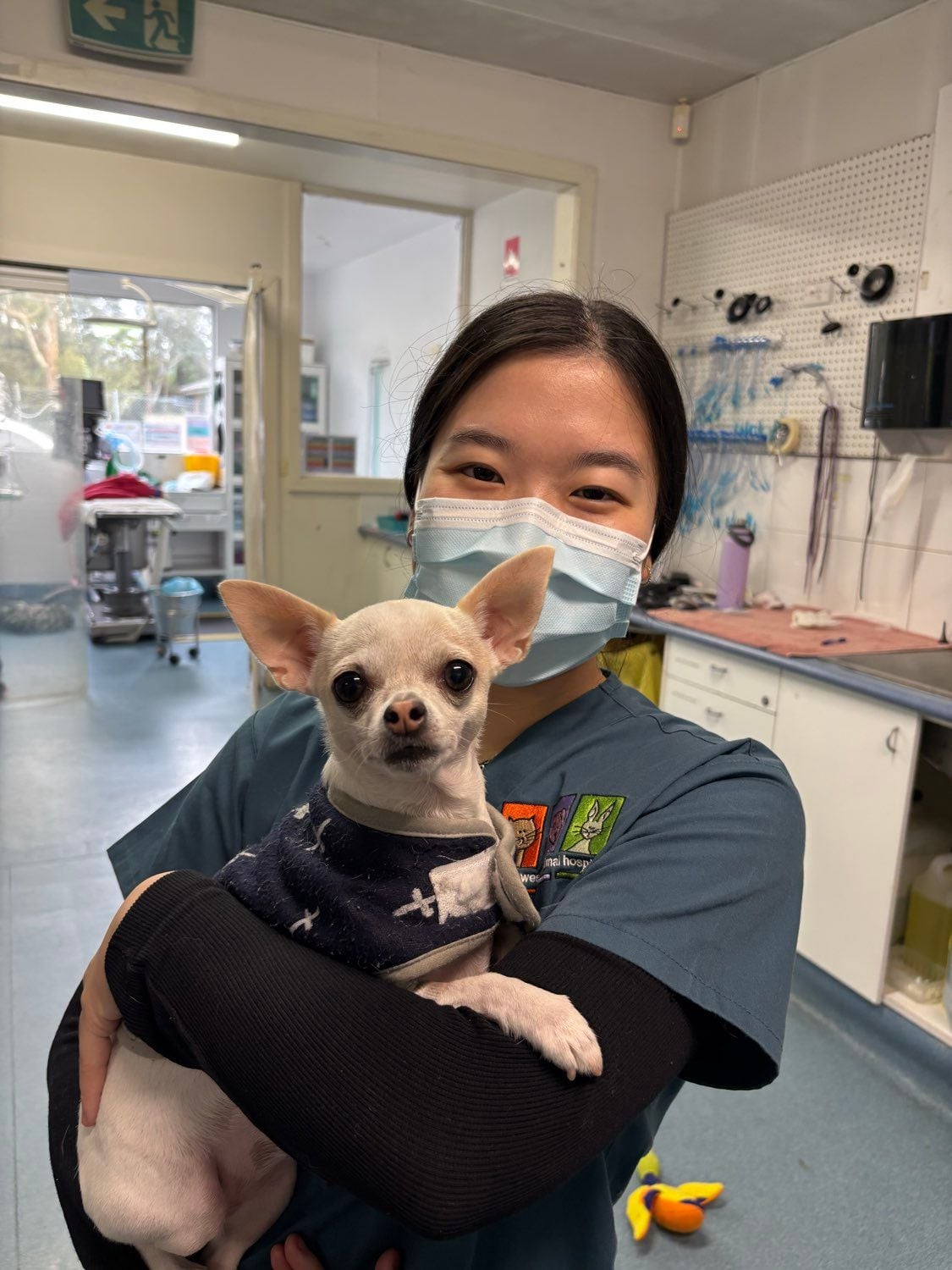
Meet Hildy
Hildy pictured above with Dr Jody came in to GWAH for what we call periodontal treatment — a proper dental clean under anaesthetic. At just three and a half years old, you might expect her mouth to be in great shape.
It wasn't.
When our team examined her under anaesthetic, took full-mouth dental X-rays, and mapped her gums, we found crowded teeth, retained baby teeth, gum disease, and roots that had already started to break down. She needed several extractions to get her mouth healthy and pain-free again.
And here's the thing: Hildy had been eating, playing, and being her normal happy self the whole time. Her owners had no idea anything was wrong.
So why DO small dogs have such bad teeth?
It comes down to a simple problem: small dogs have the same 42 teeth as big dogs — just crammed into a much smaller jaw.
That crowding causes a cascade of issues:
- Teeth sit too close together, trapping food, plaque and bacteria in tight spaces that are almost impossible to keep clean
- Plaque hardens into tartar quickly, especially along and below the gumline
- Gum disease (periodontal disease) sets in early — often by age two or three
- Baby teeth don't always fall out (more on that below), making the crowding even worse
Hildy's mouth showed exactly this. Her little jaw simply didn't have room for all her teeth to sit healthily — and the crowding had been quietly causing problems for a while.
The retained baby teeth problem
Here's something many small-breed owners have never heard of: toy breeds often keep their baby teeth.
Normally, a puppy's deciduous (baby) teeth fall out to make way for the adult teeth. But in small breeds, the baby teeth frequently don't budge. The adult tooth comes through anyway — and now you've got two teeth jammed into a space meant for one.
This causes:
- Even more crowding
- Food and plaque traps between the doubled-up teeth
- Early, accelerated gum disease
In Hildy's case, we suspected retained baby teeth had contributed to crowding and gum disease around her carnassials (her big chewing teeth). It's one of the most common things we see in Chihuahuas, Pomeranians, Yorkies, Maltese and other toy breeds.
But she seemed completely fine!
This is the part every owner struggles with — and it's the most important thing to understand.
Dogs are incredibly good at hiding pain. It's a survival instinct. They'll keep eating, keep playing, and keep wagging their tails even when their mouth is genuinely sore. Hildy did exactly that.
The signs of dental disease in small dogs are usually subtle:
- Bad breath (the most common early sign — it's not just "dog breath")
- Eating more slowly or dropping bits of food
- Pawing at the mouth or rubbing their face
- Reluctance to chew toys they used to love
- Slightly red or bleeding gums
If you've noticed any of these in your little dog, it's worth a check, even if they seem otherwise happy.
What we did for Hildy
Hildy's treatment is a great example of what a proper dental involves. It's far more than a quick clean:
- A pre-anaesthetic exam to make sure she was fit for her anaesthetic
- A general anaesthetic with IV fluids and a dedicated nurse monitoring her every minute
- A full periodontal exam - probing and mapping every tooth and gum pocket
- Full-mouth dental X-rays to see what was happening below the gumline
- Scaling and polishing to remove plaque and tartar above and below the gums
- Multiple extractions of the teeth that were too damaged or crowded to save
- Pain relief to keep her comfortable, and a cosy recovery wrapped up warm
Little dogs like Hildy need extra-careful anaesthetic management because of their size — and that's exactly why an experienced team and proper monitoring matter so much. Hildy did wonderfully and went home the same afternoon.
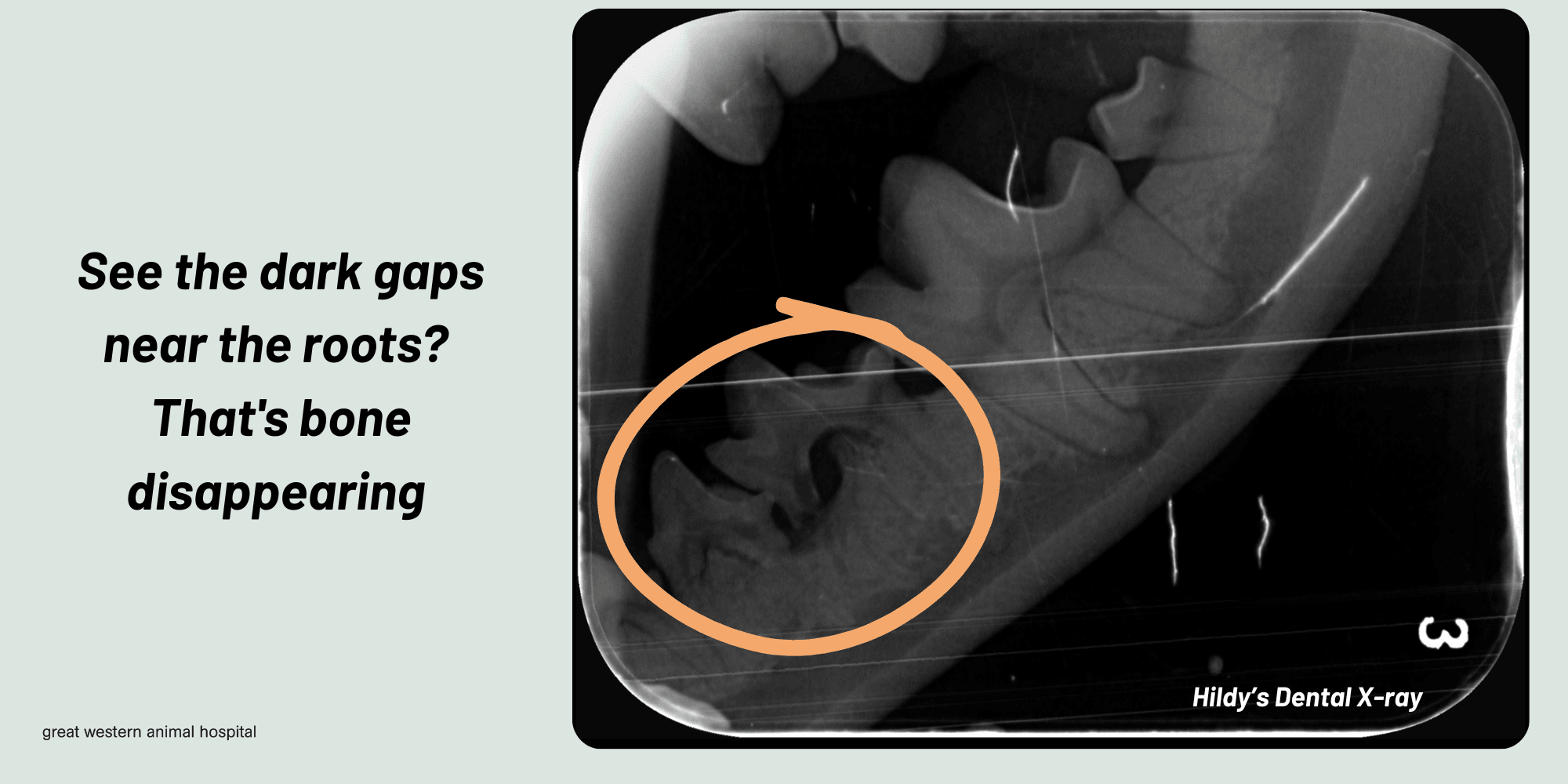
Hildy's dental X-ray. The circled area shows bone loss around her tooth roots — damage you simply can't see by looking in her mouth, and something only a dental X-ray under anaesthetic can reveal.
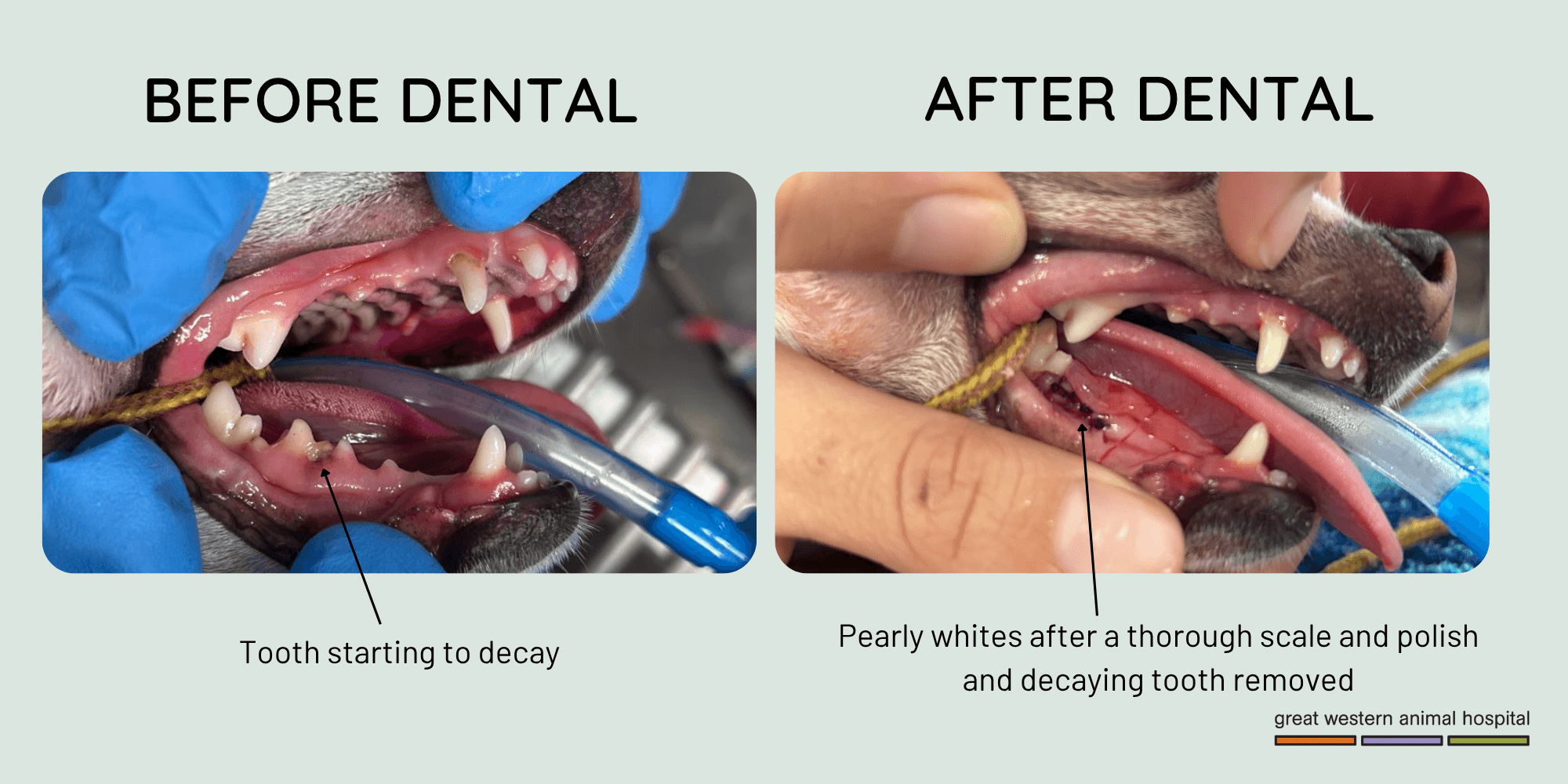
The happy ending
Hildy recovered beautifully. With the problem teeth gone and her mouth cleaned up, she's now pain-free.
Dogs are often brighter, more playful and more comfortable after a dental than their owners expect, precisely because they'd been quietly living with discomfort for so long.
How to protect your small dog's teeth
You can't change your dog's jaw size, but you can stay ahead of dental disease:
- Get their teeth checked regularly — we'll look at your dog's mouth at every health check, free of charge
- Brush at home if you can — even a few times a week makes a real difference (we're happy to show you how)
- Use vet-recommended or VOHC-approved dental products — dental chews, water additives, and special diets all help
- Don't wait for it to "look bad" — by the time it's obvious, the damage is usually well underway
- Book a dental clean when we recommend one — for many small breeds, that's around every 12 months
Is your little dog due for a dental check?
For all of June, we're running Dental Month at GWAH with $100 off dog and cat dental cleans (from just $485 for small breeds).
If you've got a small breed at home, this is the perfect time to get their mouth checked. Whether they need a full dental like Hildy or just a once-over for peace of mind, we'd love to help.
Not sure if your dog needs a dental?
We're always happy to do a free visual dental check during your next consult or health check. No pressure, no upsell — just an honest look and a recommendation.
With thanks to Hildy and her family for letting us share her story to help other little dogs.
| Tags:Proactive Pet CareDogCatClient InformationPet Dental Health |
Check Out Our
Recent Articles
- Tinsel Went Blind. His Blood Pressure Was 280.
- Senior Pet Health Checks: What Tests Are Reccomended and Why?
- 5 Signs Your Pet's Upset Stomach Needs a Vet Check
- Feline Leukaemia Virus in Cats: Symptoms, Testing and Prevention (Sydney...
- Cat Flu in Cats: Symptoms, Treatment and Prevention (Sydney Vet Guide)