&geometry(180x112) "Great Western Animal Hospital")
Why your vet might ask for a urine sample from your pet
 "Why your vet might ask for a urine sample from your pet")
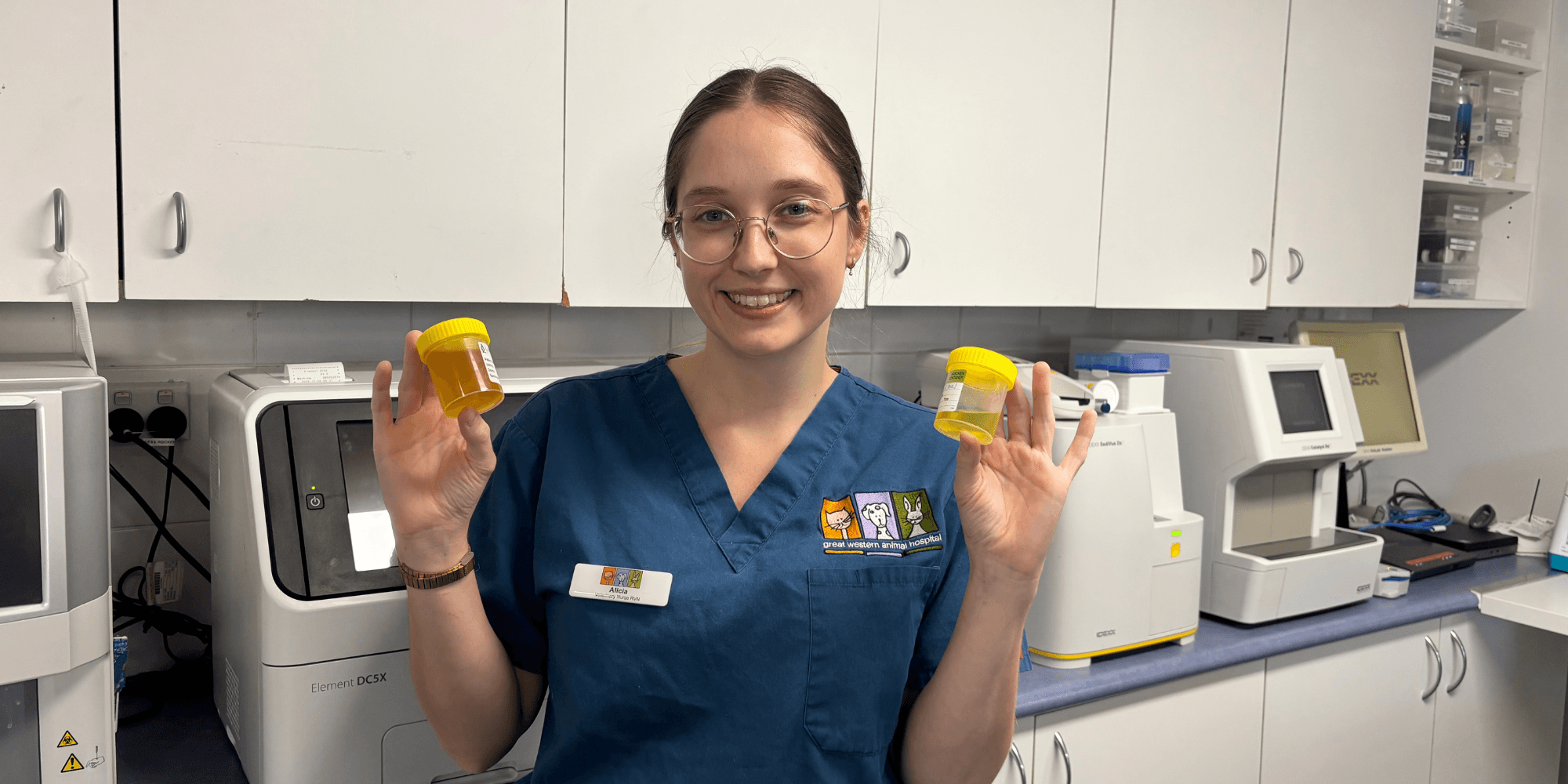
At Great Western Animal Hospital in Greystanes, we often recommend urine testing as part of routine health checks or when a pet shows changes in their urination habits. A simple urine sample can reveal a lot about your dog or cat’s health and can help us diagnose problems early, before they become more serious.
Why urine testing is important
Urinalysis is one of the most valuable tools we use to assess kidney function, urinary tract health and overall wellbeing. Because the kidneys filter waste and help regulate fluid balance, changes in urine can be an early sign that something isn’t quite right.
We commonly suggest a urine test if your pet is:
- Drinking more than usual
- Urinating more often or having accidents
- Straining or showing discomfort when urinating
- Producing urine that looks cloudy, darker than normal or has a strong smell
It’s also a routine part of senior pet care and ongoing monitoring for conditions like kidney disease, diabetes or urinary tract infections.
What we look for in a urine test
A urinalysis includes several components that help us build a clear picture of your pet’s health.
Appearance
We check the colour, smell and clarity of the urine. Cloudiness, a strong odour or dark colour can point to infection, inflammation or dehydration.
Urine concentration
This tells us how well the kidneys are concentrating urine. Dilute urine can suggest kidney disease, hormonal issues or excessive drinking.
Chemical testing
A dipstick test allows us to detect:
- Protein which can indicate kidney problems
- Glucose which may suggest diabetes
- Blood which can come from infection, stones or inflammation
- Ketones which may be linked to diabetes or metabolic issues
- pH changes which can influence crystal or stone formation
Microscopic exam
We have a special machine that acts like a microscope that we use to look for cells, bacteria, crystals and other material that help diagnose urinary tract infections, bladder stones, kidney disease and other concerns.
What a urine test can reveal
Even a small amount of urine can give us valuable information about:
- Early kidney disease
- Urinary tract infections
- Bladder stones or crystals
- Diabetes
- Dehydration
- Metabolic or endocrine disorders
For pets in Greystanes, Pemulwuy, Merrylands and the wider Western Sydney area, early detection allows us to treat problems sooner and support long-term health.
How to collect a urine sample at home
Dogs
- Use a clean, non-absorbent container such as a plastic takeaway tub.
- Take your dog outside on a short lead and slide the container under them as they start to urinate.
- Transfer the urine into a clean jar and keep it cool.
- Bring it to Great Western Animal Hospital as soon as possible (ideally within an hour).
- If needed, refrigerate the sample for up to 12 hours.
Cats
- Use non-absorbent litter beads (available from our clinic) in a clean litter tray.
- Alternatively, use clean cut-up plastic bags or another non-absorbent material.
- Collect the urine using a syringe or pipette and place it into a clean container.
- Keep it refrigerated and bring it to us promptly for testing.
In summary
Urine testing is quick, non-invasive and incredibly useful. At Great Western Animal Hospital, it helps us diagnose concerns early and provide the best possible care for pets across Greystanes and Western Sydney.
| Tags:Proactive Pet CareDogHealth AdviceCatClient Information |
Check Out Our
Recent Articles
- Tinsel Went Blind. His Blood Pressure Was 280.
- Senior Pet Health Checks: What Tests Are Reccomended and Why?
- 5 Signs Your Pet's Upset Stomach Needs a Vet Check
- Feline Leukaemia Virus in Cats: Symptoms, Testing and Prevention (Sydney...
- Cat Flu in Cats: Symptoms, Treatment and Prevention (Sydney Vet Guide)