&geometry(180x112) "Great Western Animal Hospital")
How Much Should My Pet Actually Be Eating? A Vet-Approved Guide for Dogs and Cats
 "How Much Should My Pet Actually Be Eating? A Vet-Approved Guide for Dogs and Cats")
If you’ve ever stood in the kitchen wondering whether you’re feeding your pet too much or not enough, you’re not alone. “How much should my pet actually be eating?” is one of the most common questions we hear from dog and cat owners. With confusing feeding guides, online calculators, and well-meaning advice from friends, it’s easy to feel unsure. The truth is, there’s no one-size-fits-all answer, but there is a clear way to work it out.
Why the Feeding Guide on the Bag Can Be Misleading
Pet food feeding guides are a starting point, not a personalised plan. They’re designed to suit a wide range of pets and often assume a very active lifestyle. For many dogs and cats, especially those living indoors or enjoying shorter walks, these recommendations can slowly lead to overfeeding and gradual weight gain.
How to Read Feeding Charts on Pet Food Bags (Without Getting Confused)
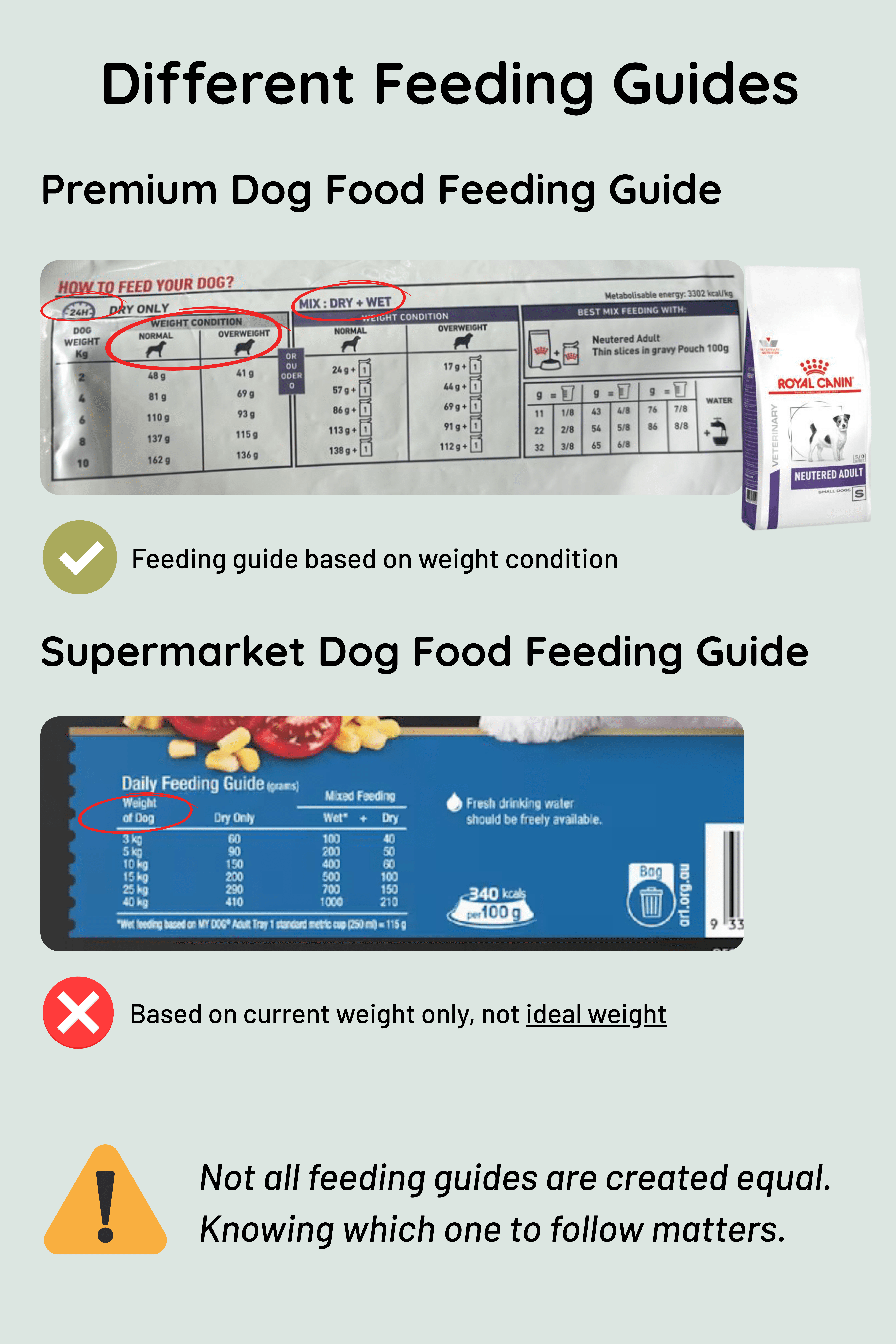
Feeding charts can still be useful, but only if you know how to interpret them correctly. Most charts are based on your pet’s current weight, not their ideal weight. If your pet is already carrying extra kilos, following the chart exactly can unintentionally maintain or worsen the problem.
Feeding guides are usually broken down by weight ranges with a recommended daily amount, sometimes split by activity level. What’s often missed is that these charts don’t factor in age, desexing, indoor lifestyles, or medical conditions that reduce calorie needs.
Another common pitfall is mistaking the listed amount as “per meal” rather than “per day”. Feeding guides almost always show the total daily allowance, which should then be divided across meals. Misreading this can easily double a pet’s intake.
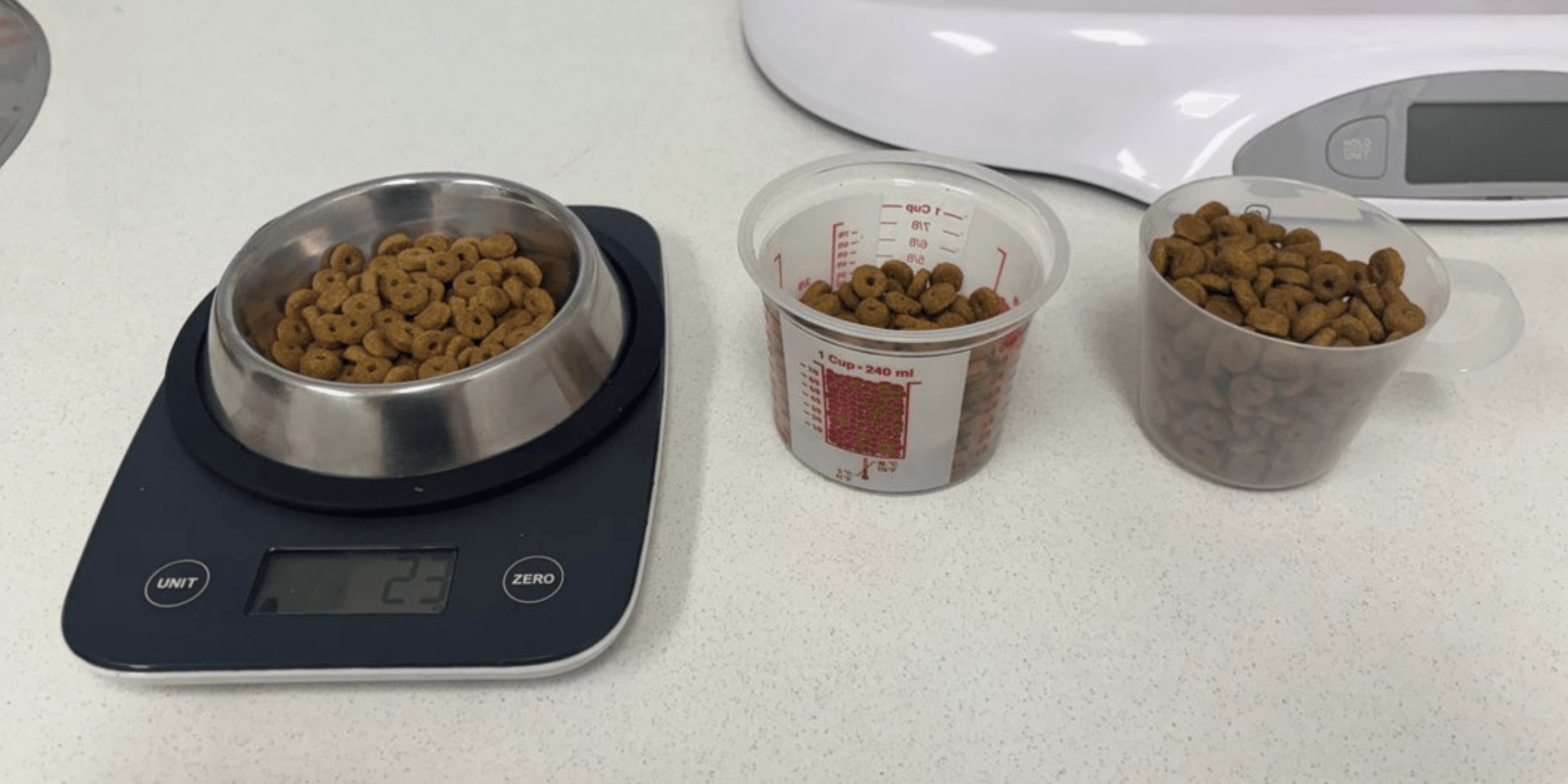
It’s also important to check the units. Some brands use grams, others cups, and scoops vary widely. Using a kitchen scale is often far more accurate than relying on a scoop.
Think of feeding charts as a rough guide, not a rule book.
What Really Determines How Much Your Pet Should Eat
The right portion size depends on several individual factors working together:
- Ideal weight versus current weight
- Age and life stage
- Breed and body type
- Activity level
- Desexing and metabolism
- Existing health conditions
This is why two pets of the same size can need very different amounts of food.
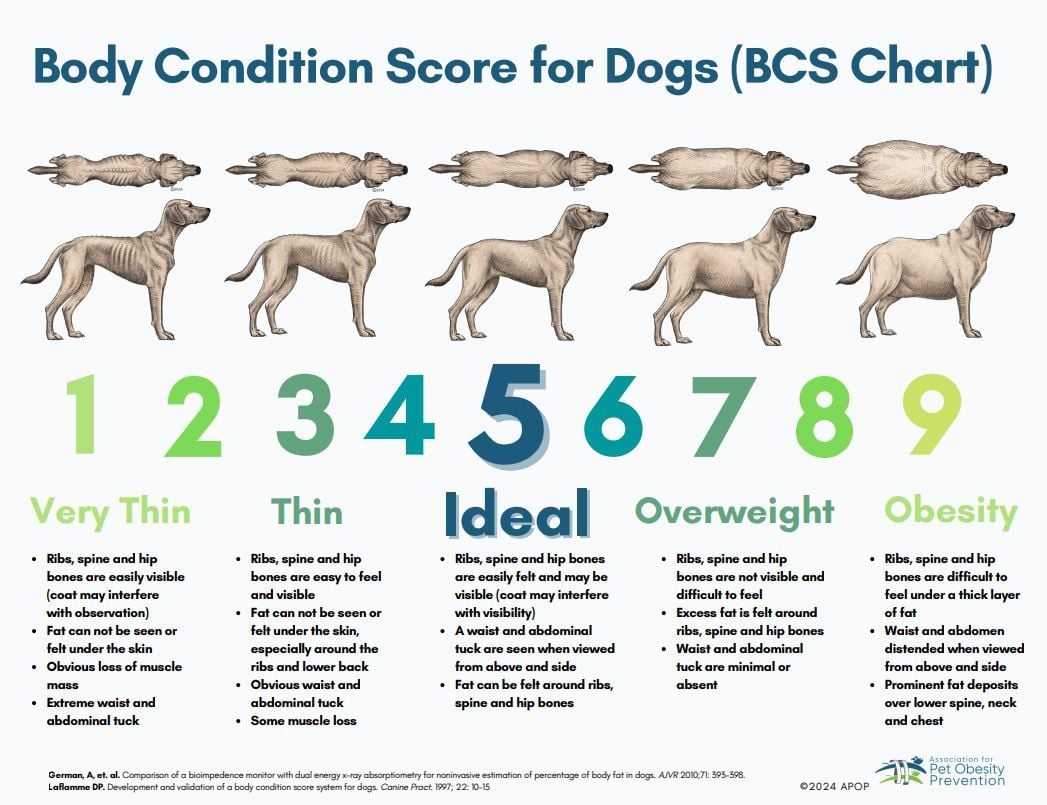
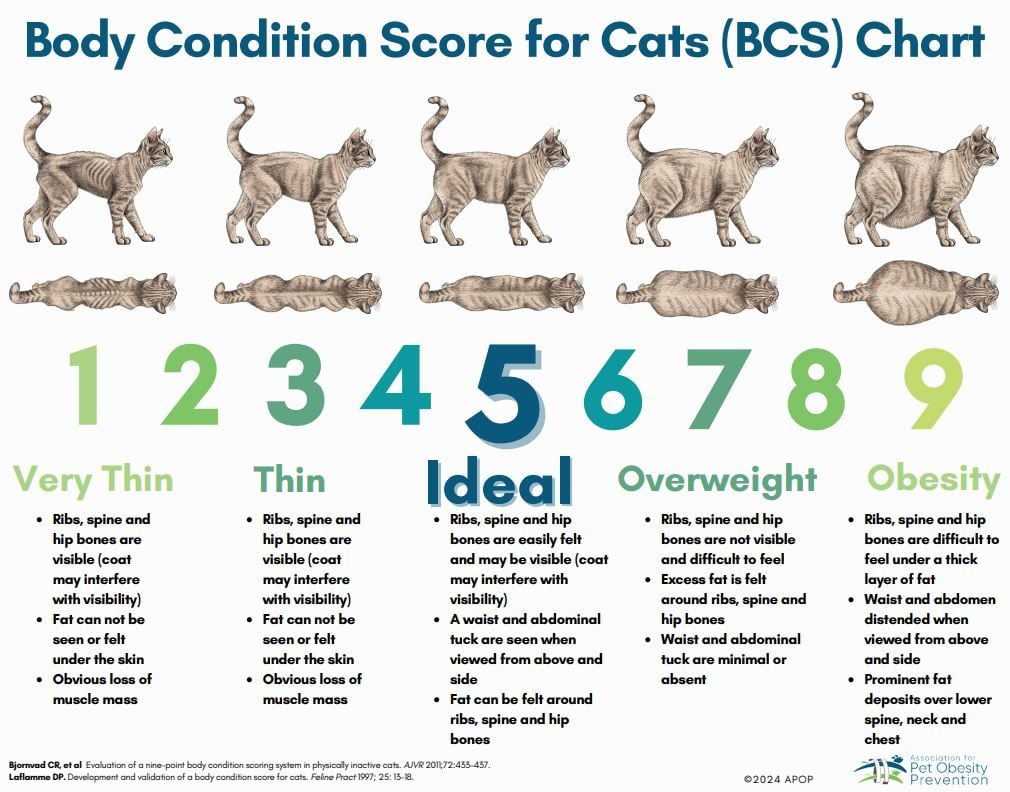
Image source: Association for Pet Obesity Prevention
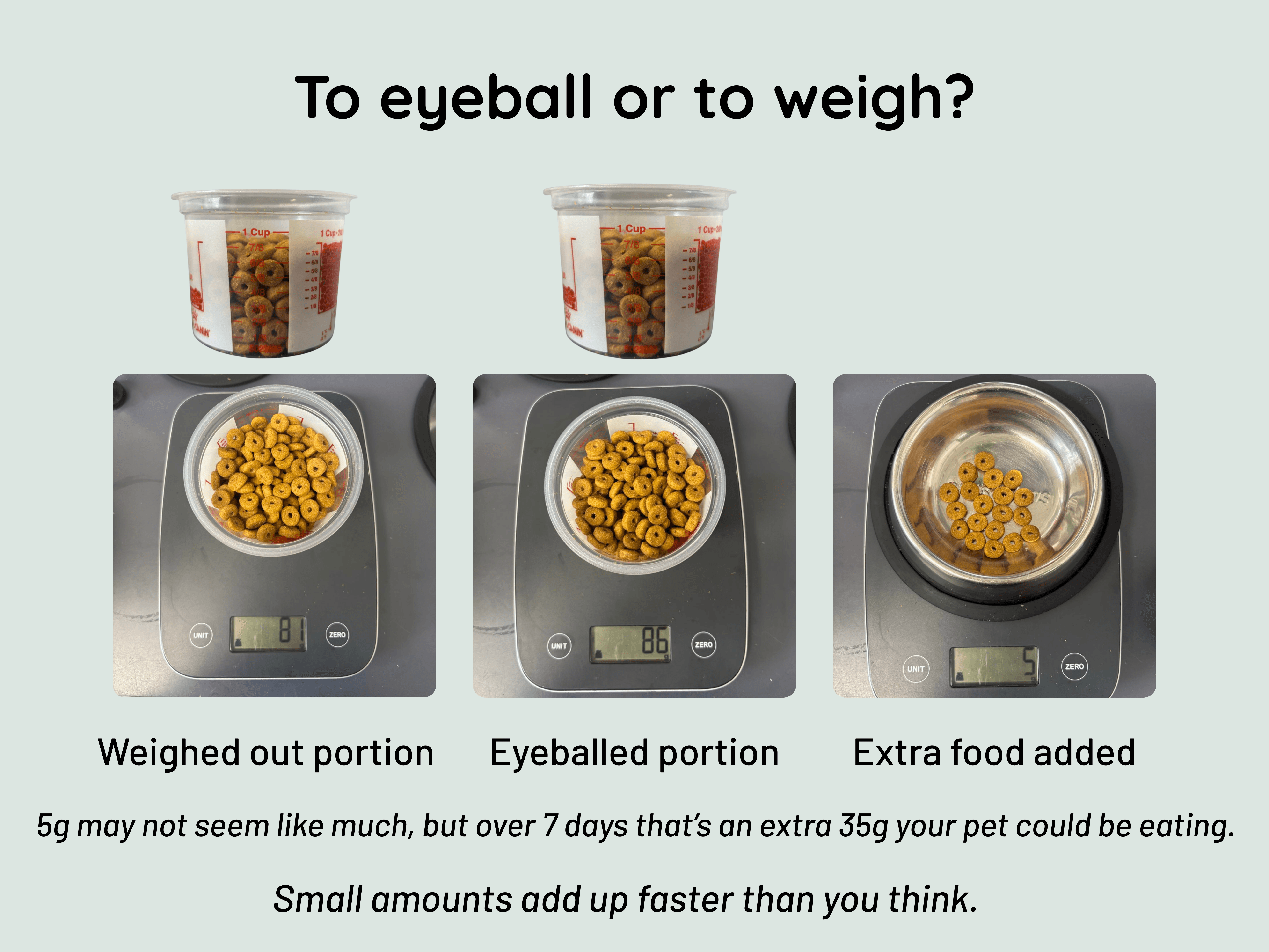
Measuring Matters More Than You Think
“Eyeballing it” is one of the most common reasons pets gain weight. Small extras added day after day can quietly add up. Measuring portions accurately and remembering that treats count as calories too can make a big difference.
Why Online Calculators Can Fall Short
Online calorie calculators can be helpful, but they can’t assess body condition, muscle tone, or lifestyle. They also can’t tell where weight is being carried or whether adjustments are truly appropriate for your pet.
How a Nurse Weight Check Helps
A nurse weight check takes the guesswork out of feeding. During the visit, your pet is weighed, body condition is assessed, and their diet is reviewed. Our nurses can help you understand exactly how much your pet should be eating and set realistic, achievable goals if weight loss is needed. These checks are supportive, pressure-free, and focused on long-term health.
The Bottom Line
Feeding the right amount isn’t about restriction or guilt. It’s about helping your pet feel comfortable, mobile, and healthy for years to come. If you’d like personalised advice and peace of mind, booking a free nurse weight check is a great first step. Sometimes, knowing you’re feeding just the right amount makes all the difference.
| Tags:Proactive Pet CareDogHealth AdviceCatClient Information |
Check Out Our
Recent Articles
- Tinsel Went Blind. His Blood Pressure Was 280.
- Senior Pet Health Checks: What Tests Are Reccomended and Why?
- 5 Signs Your Pet's Upset Stomach Needs a Vet Check
- Feline Leukaemia Virus in Cats: Symptoms, Testing and Prevention (Sydney...
- Cat Flu in Cats: Symptoms, Treatment and Prevention (Sydney Vet Guide)