&geometry(180x112) "Great Western Animal Hospital")
What age should I desex my pet? New Desexing Guidelines
 "What age should I desex my pet? New Desexing Guidelines")
New Desexing Guidelines for Dogs
Recent updates from the World Small Animal Veterinary Association (WSAVA) suggest moving away from a blanket recommendation to desex all dogs before sexual maturity. Instead, the recommendation is to tailor the timing of desexing to each dog’s individual circumstances. If you are considering desexing your dog, we encourage you to discuss the best timing with your veterinarian at your dog’s Juvenile Health Check.
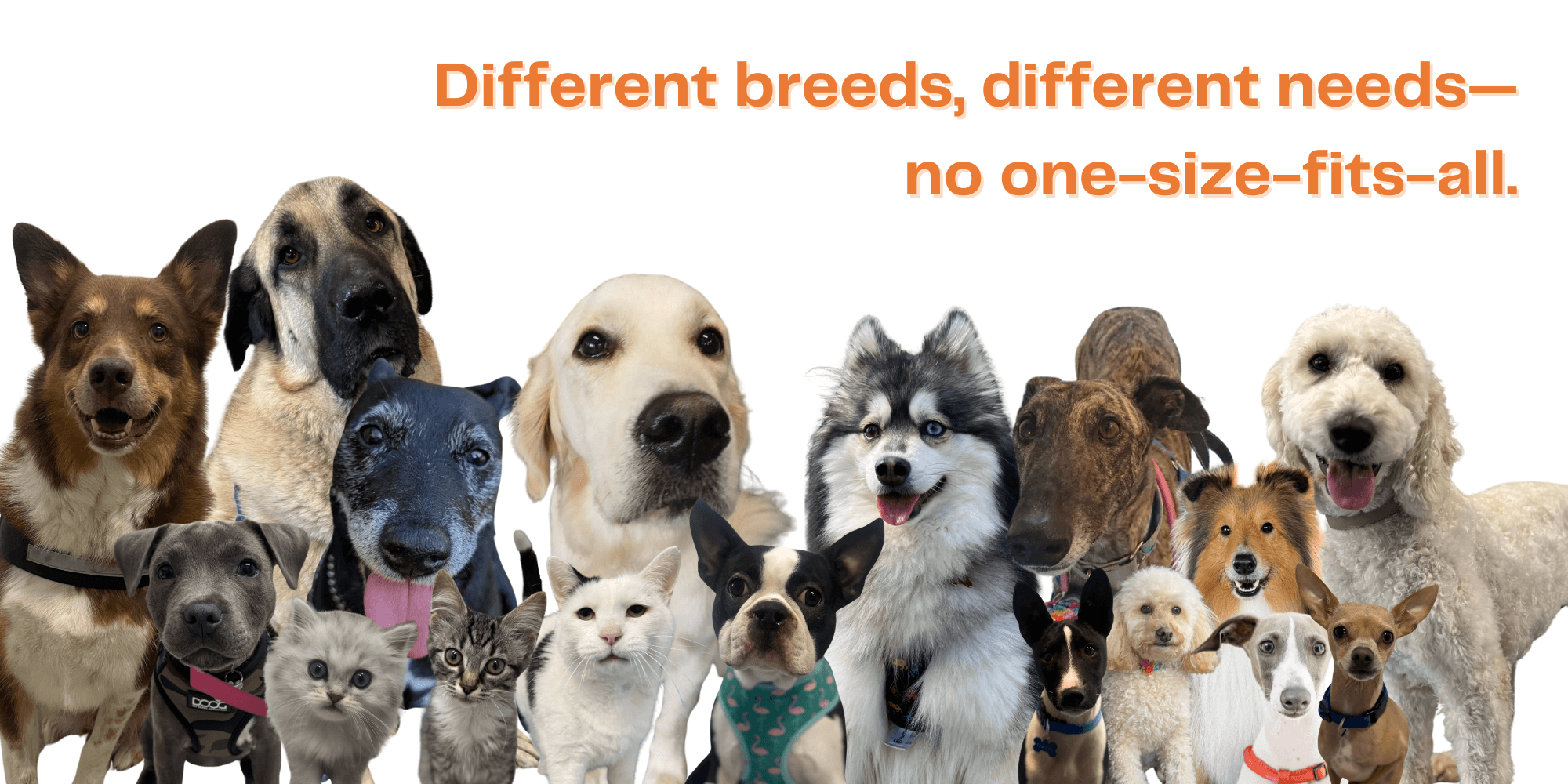
General Recommendations by Breed Size
Large and Giant Breed Dogs: Desex at 18 months of age or older
Medium Breed Dogs: Desex between 12-18 months of age
Small Breed Dogs: Desex between 6-12 months of age
Cats: Desex at 6 months of age
(Please note that these are general guidelines. Breed-specific recommendations may vary; see the table below for breed-specific recommendations.
Ovary-Sparing Techniques
For some female dogs, an ovary sparing procedure can be considered. In this surgery, the reproductive tract is removed, but one ovary is left intact. Retaining the ovary allows continued production of sex hormones, which may protect against certain joint issues and cancers in specific breeds.
Heat Cycles: The dog will still have a heat cycle (though without bleeding) and may be receptive to males for about two weeks, twice a year.
Reduced Risks: Removing the reproductive tract eliminates the risk of pregnancy, most reproductive infections, and most reproductive cancers.
Advantages of Desexing
Prevents unwanted pregnancy: reduces stray behaviour and roaming.
Eliminates “in-season” bleeding in females; also decreases urine marking in males.
Reduces Risk of Infections: such as pyometra (uterine infection) in females—affecting ~4% of undesexed females—and prostate infections in males.
Lowers Risk of Certain Cancers: Including ovarian, uterine, cervical, and testicular cancers. (Note that mammary tumors can still occur in desexed females, and prostatic cancer rates may be higher in desexed males.)
Behaviour Considerations:
There is no definitive evidence that desexing alone improves behaviour. Desexing may help reduce testosterone-driven behaviours (e.g., territorial aggression, urine marking). However, if your dog shows signs of anxiety, the presence of sex hormones may actually be beneficial, and delaying desexing until at least one year of age could be recommended.
Disadvantages of Desexing
Joint Issues in Large Breeds: Early desexing before skeletal maturity may increase the risk of joint problems (e.g., cruciate ligament disease, elbow dysplasia, hip dysplasia) in breeds such as German Shepherds and Labradors.
Higher Rates of Obesity: Desexed dogs tend to gain weight more easily.
Slightly Increased Risk of Some Cancers: In certain breeds (e.g., Boxers), early desexing may increase susceptibility to specific cancers.
Urinary Incontinence in Females: Early desexing can raise the risk of incontinence in some female dogs (breed-specific variations apply).
Summary Of Breed Specific Risk Of Joint Disease And Cancers With Early Desexing By Breed
A study compared the rates of joint disease, cancer, urinary incontinence, uterine infections, and mammary tumours in dogs desexed young and those not desexed, across various breeds. Approx. 200 dogs from each breed were reviewed. The cancers analysed include lymphosarcoma, hemangiosarcoma, mast cell tumours, mammary tumours.
Benjamin L. Hart1*Lynette A. Hart2Abigail P. Thigpen; Front. Vet. Sci. , 07 July 2020
| Breed | Increased Risk Of Joint Disease If Desexed Before Skeletal Maturity | Increased Risk Of Cancer If Desexed Before Skeletal Maturity | Other | Desexing Recommendation |
|---|---|---|---|---|
| Australian Cattle dog | In females | Nil | Desex > 6 months | |
| Australian Shepherd | Nil | Nil | Can develop mammary tumours | Desex at any time Monitor mammary glands as ages |
| Beagel | Mild in males | Nil | Males < 12 months | |
| Bernese Mountain Dog | Significant increased risk | Mild increase in females | > 2 years | |
| Border Collie | Nil | Increased | > 1 year | |
| Boxer | Nil | Higher rates of cancer generally, slightly increased with early desexing | > 2 years | |
| Bulldog | Nil | Nil | 6 months + | |
| Cavalier King Charles Spaniel | Nil | Nil | 6 months | |
| Chihuahua | Nil | Nil | 6 months | |
| Cocker Spaniel | Mild in males | Increased risk for females (Mast Cell Tumours) | > 2 years | |
| Collie | Nil | Mild in females | Increased risk urinary incontinence if desexed early High rates of (pyometron) uterine infection in undesexed females | >1 year |
| Corgie | Increased IVDD in males | Nil | Females > 6 months Males > 12 months | |
| Daschund | Nil | Nil | High baseline rates IVDD no worse with early desexing | > 6 months |
| Doberman | Nil | Females | High rates urinary incontinence if desexed young | females < 2 years |
| English Springer Spaniel | Nil | Nil | High rates urinary incontinence if desexed young | females < 1year |
| German Shepherd | Yes | Nil | Mild increase risk urinary incontinence | >2 years |
| Golden Retriever | Yes | High baseline rates cancer made worse with early desexing | Delays >1-2 years Or consider ovary sparing or not desexing | |
| Great Dane | Nil | Nil | Previous recommendation desex < 2years | |
| Irish Wolfhound | Nil | Nil | Previous recommendation desex < 2 years | |
| Jack Russell Terrier | Nil | Nil | 6 months | |
| Labrador | Yes | Nil | >12 months | |
| Maltese | Nil | Nil | 6 months | |
| Minitureon Schnauzer | Nil | Nil | 6 months | |
| Poodle, Toy | Nil | Nil | 6 months | |
| Poodle, Miniature | In males | Nil | Females 6 months Males >12 months | |
| Poodle, Standard | Nil | In males | Males >2 years Females 6-12 months | |
| Pug | nil | Nil | 6 months | |
| Rottweiler | Yes | Nil | >1 year | |
| Saint Bernard | Females | Nil | Increase risk urinary incontinence | Females >2 years |
| Shetland Sheepdog | Nil | Nil | Increase risk urinary incontinence | Females >2 years |
| Shitzu | Nil | Yes females | Females > 12 months | |
| West Highland White Terrier | Nil | Nil | Mild increase risk urinary incontinence | Female > 1 year |
| Yorkshire Terrier | Nil | Nil | 6 months | |
| Mixed Breed Dogs < 20kg | Nil | Nil | Desex anytime | |
| Mixed Breeds > 20kg | Yes | Nil | Desex > 12 months |
| Tags:Proactive Pet CareDogHealth AdviceCatPet Surgery |
Check Out Our
Recent Articles
- Tinsel Went Blind. His Blood Pressure Was 280.
- Senior Pet Health Checks: What Tests Are Reccomended and Why?
- 5 Signs Your Pet's Upset Stomach Needs a Vet Check
- Feline Leukaemia Virus in Cats: Symptoms, Testing and Prevention (Sydney...
- Cat Flu in Cats: Symptoms, Treatment and Prevention (Sydney Vet Guide)