&geometry(180x112) "Great Western Animal Hospital")
Heartworm in Dogs: Symptoms, Prevention & Treatment (Sydney Vet Guide)
 "Heartworm in Dogs: Symptoms, Prevention & Treatment (Sydney Vet Guide)")
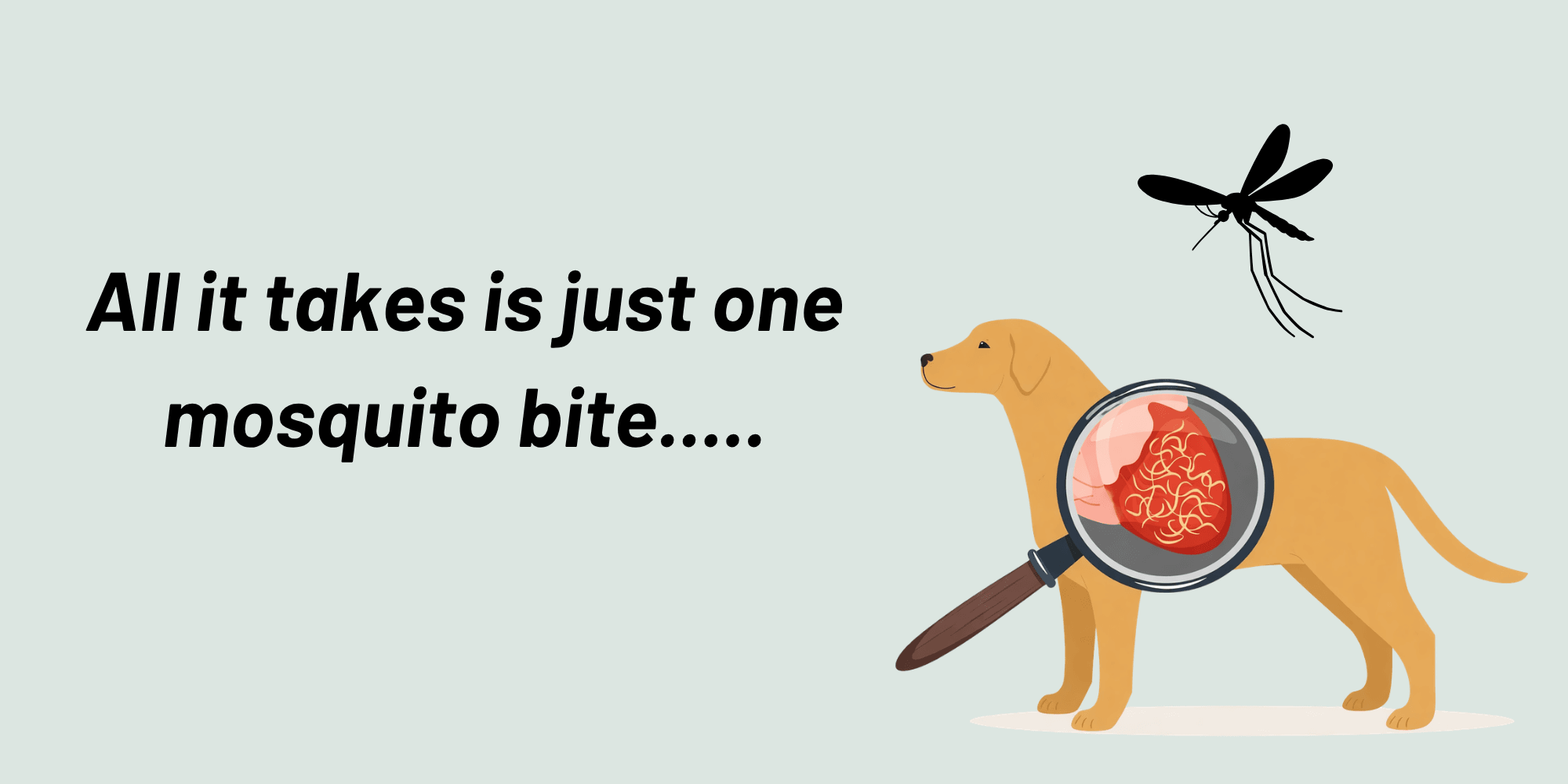
Could just one mosquito bite put your dog at risk?
It sounds unlikely, but it’s true.
Heartworm is a serious and potentially life-threatening disease that affects dogs across Australia, including here in Western Sydney. The tricky part? Most pets show no signs until the disease is already advanced.
The good news is that heartworm is completely preventable with the right protection.
What is heartworm?
Heartworm is caused by a parasite called Dirofilaria immitis. These worms live in your dog’s heart and lungs, where they can grow up to 30cm long.
They interfere with blood flow, damage organs, and in severe cases, can be fatal.
How do dogs get heartworm?
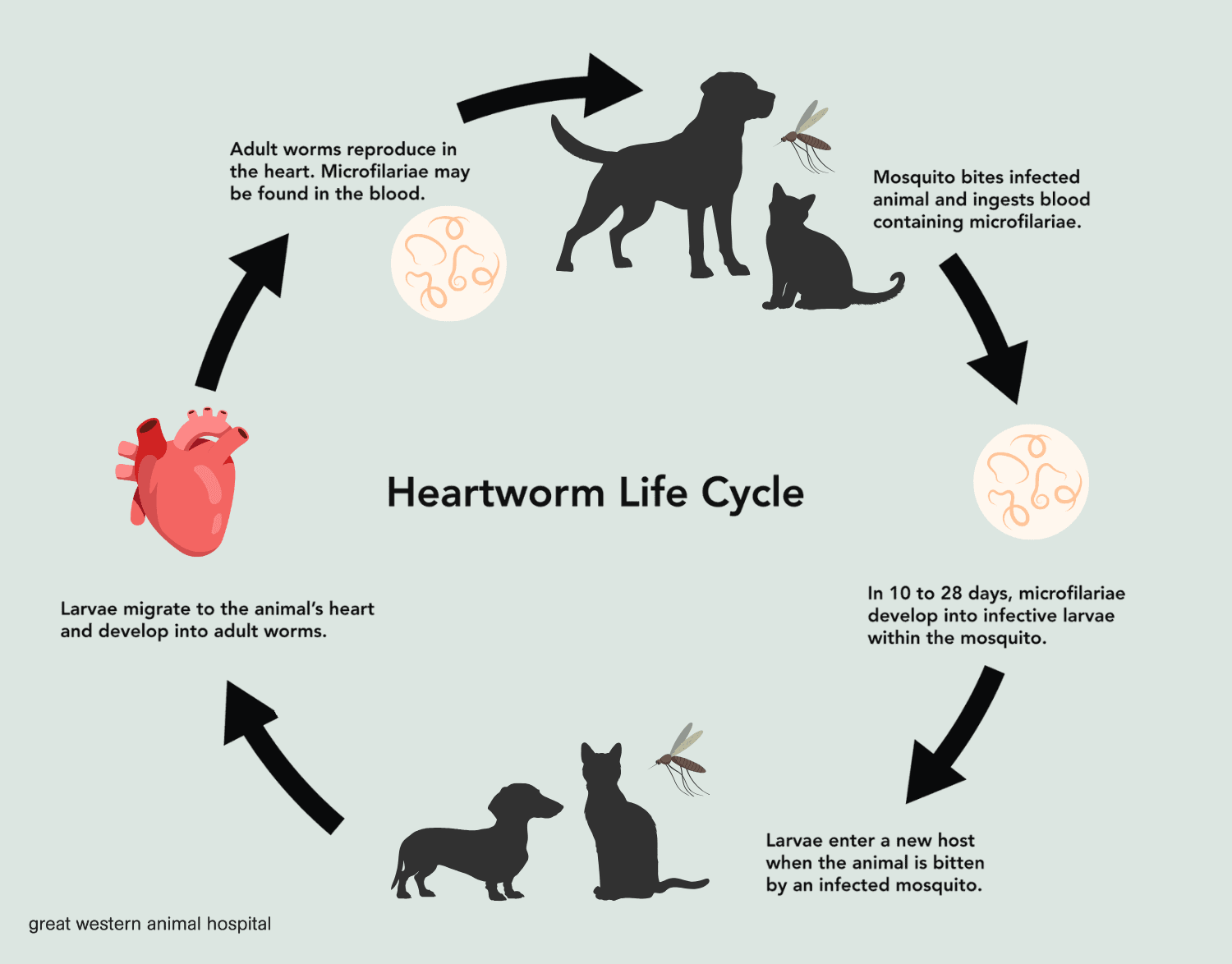
Heartworm is spread by mosquitoes.
When a mosquito bites an infected animal, it picks up tiny larvae. When that same mosquito bites your dog, it transmits the infection.
This means:
- Indoor dogs are still at risk
- You don’t need to be near bushland or water
- One bite is enough
In areas like Western Sydney, where mosquitoes are common, year-round protection is essential.
What are the symptoms of heartworm in dogs?
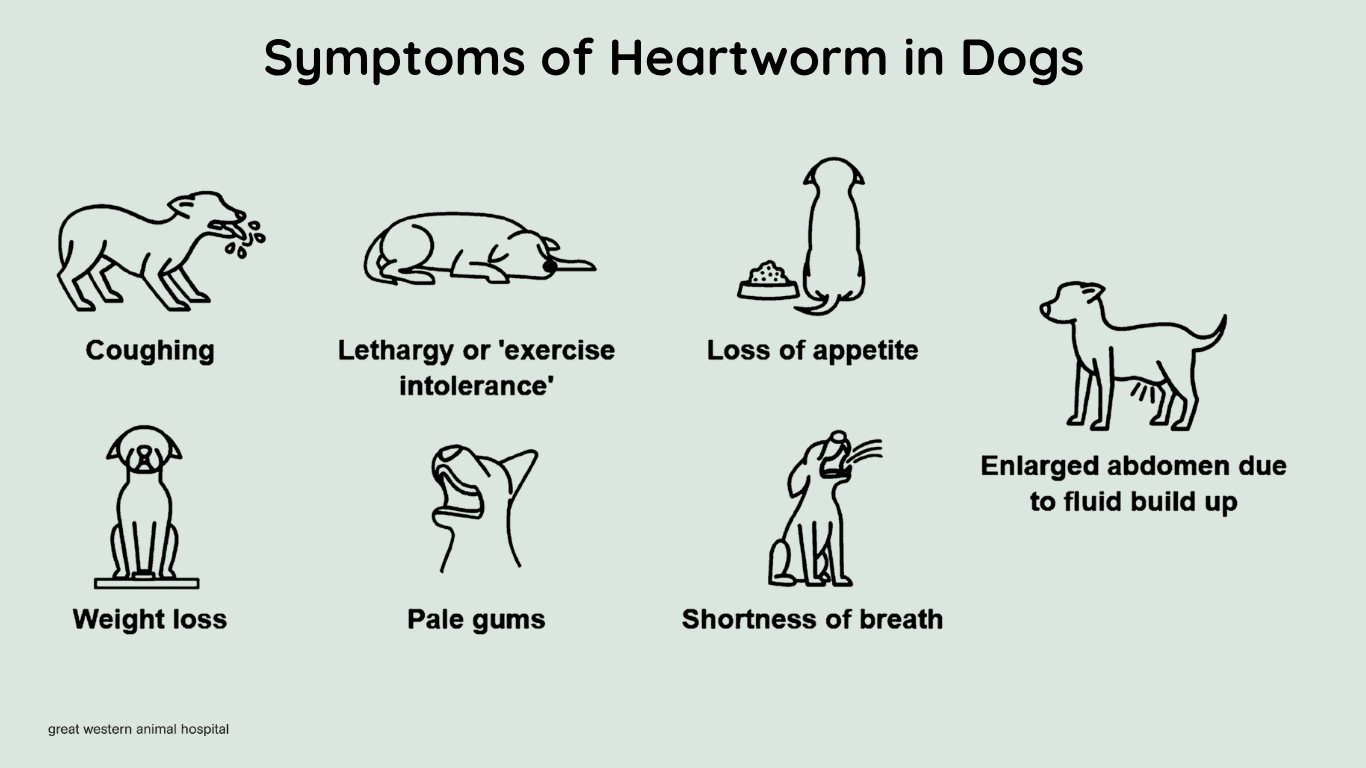
Heartworm is often called a “silent disease” because early signs can be very subtle.
Early signs:
- Mild or occasional cough
- Lethargy
- Reduced stamina
Advanced signs:
- Persistent cough
- Difficulty breathing
- Weight loss
- Collapse
- Heart failure
By the time symptoms appear, the disease is often already well progressed.
How is heartworm diagnosed?
A simple blood test can detect heartworm. It can be done in the clinic, and results are seen in as little as 5-10 minutes.
At Great Western Animal Hospital, we routinely screen for heartworm as part of your pet’s annual health check if prevention hasn’t been consistent.
Can heartworm be treated?
Yes, but treatment is:
- Complex
- Expensive
- Risky for your dog
Treatment involves multiple injections, strict rest, and careful monitoring over several months.
Because of this, prevention is always the safest and most effective option.
How do you prevent heartworm?
This is the most important part
Heartworm prevention is simple, but it must be consistent.
Your options include:
1. Monthly tablets or chews
- Effective when given on time
- Easy to forget (this is where most pets become at risk)
2. Spot-on treatments
- Applied to the skin monthly
- Still relies on consistency
3. Annual heartworm injection ?
- Provides 12 months of protection
- Includes a 3-month reach-back effect
- No risk of missed doses, we will send you a reminder every year when it is due
Many pet owners start with monthly preventatives but fall behind over time. Even missing one or two doses can leave your pet unprotected.
That’s why we often recommend the once-yearly injection as the most reliable option.
Why prevention matters so much
Heartworm is not just another parasite.
Once infected:
- Damage to the heart and lungs can be permanent
- Treatment is lengthy and stressful
- In severe cases, it can be life-threatening
Prevention is simple. Treatment is not.
Common myths about heartworm
“My dog lives indoors, so they’re safe”
Mosquitoes come inside homes, so indoor pets are still at risk.
“I only need prevention in summer”
Heartworm prevention should be given year-round in Australia.
“Missing a dose isn’t a big deal”
Even short gaps in protection can allow infection.
Protect your dog from heartworm today
At Great Western Animal Hospital, we’re passionate about keeping pets protected with simple, effective prevention plans.
For Heartworm Awareness Month, we’re currently offering:
- FREE heartworm testing for pets that are overdue
- $25 off your first heartworm injection
If you’re not sure what your pet is currently on, or whether they’re fully protected, our team is here to help.
Call us, book online, or chat to our team at your next visit.
Not sure what’s best for your pet?
Every pet is different, and the best prevention plan depends on their lifestyle, age, and medical history.
We’re always happy to talk you through your options and help you choose the safest, easiest way to keep your pet protected year-round.
| Tags:Pet SafetyProactive Pet CareDogHealth AdviceCatClient Information |
Check Out Our
Recent Articles
- Tinsel Went Blind. His Blood Pressure Was 280.
- Senior Pet Health Checks: What Tests Are Reccomended and Why?
- 5 Signs Your Pet's Upset Stomach Needs a Vet Check
- Feline Leukaemia Virus in Cats: Symptoms, Testing and Prevention (Sydney...
- Cat Flu in Cats: Symptoms, Treatment and Prevention (Sydney Vet Guide)