Physiotherapy is an important part of your dog's recovery after orthopaedic surgery. It helps manage pain and swelling, keep the joint moving, and rebuild strength as they heal. Below are the exercises we may recommend, and when to start each one. Your vet will let you know which of these apply to your dog and when to begin.
Post-Orthopaedic Physiotherapy
Always keep sessions gentle and positive. Stop if your dog seems painful or distressed, and never force a movement. If something doesn't feel right, give us a call before continuing.
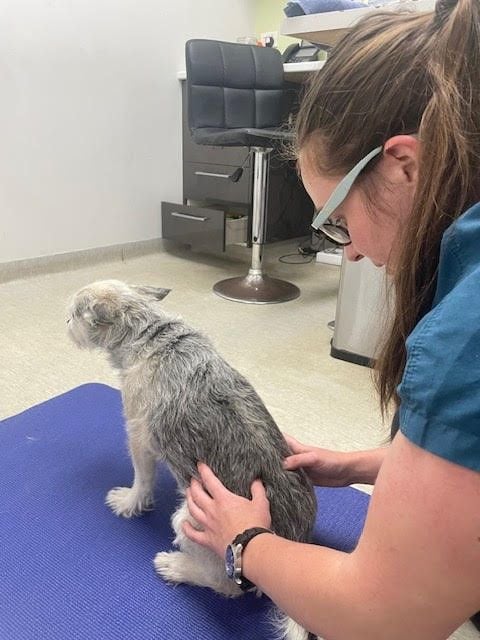
Butterfly Massage
From immediately post-opGently massage the lower-back muscles from the base of the tail up to the shoulders, using your whole hand in a circular “butterfly” motion. Start light, then build to the firmest pressure your dog will comfortably tolerate. Up to 15 minutes, but let their comfort guide how long.
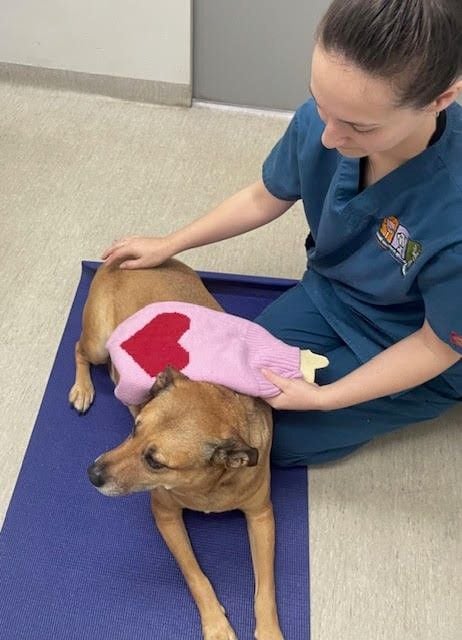
Warm Pack on Shoulders
From immediately post-opApply a warm pack over the shoulder area for 15-20 minutes. Keep this at least 2 hours apart from the cold packing of the wound. Many clients find it easiest to warm-pack in the middle of the day, and cold-pack morning and night.
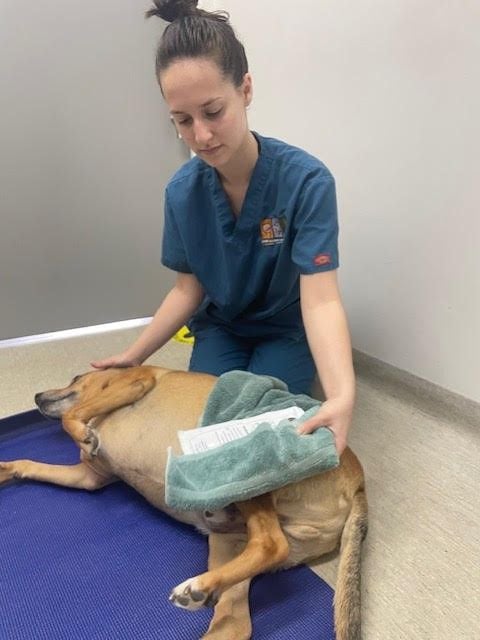
Cold Pack on Wound
From immediately post-opApply a cold or frozen pack with a towel between the ice and your dog, directly over the wound, for 15 minutes or for as long as they tolerate. Up to 2-3 times daily. Keep this at least 2 hours apart from the warm packing of the shoulders.
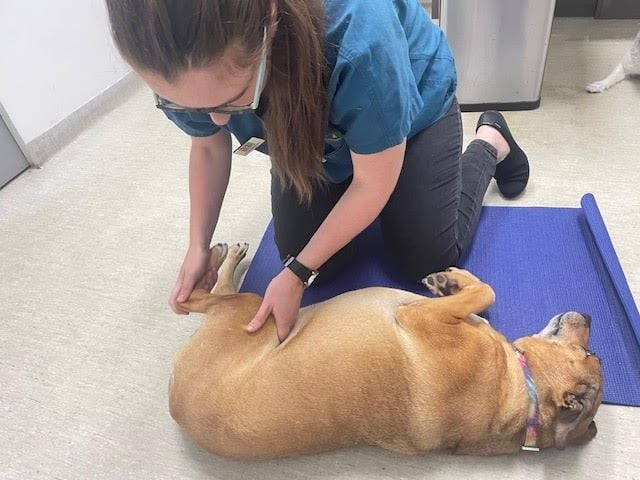
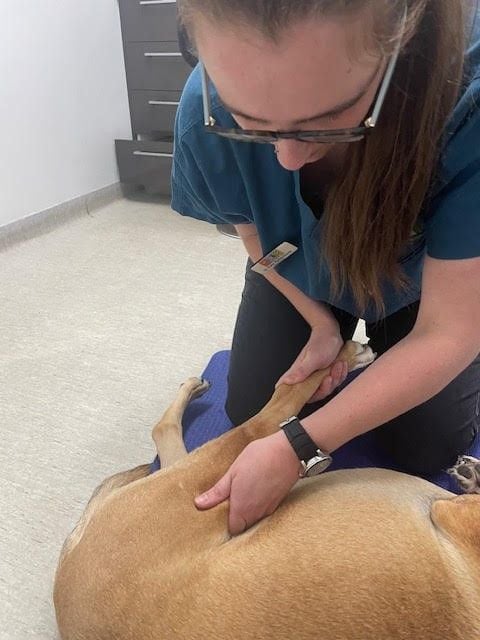
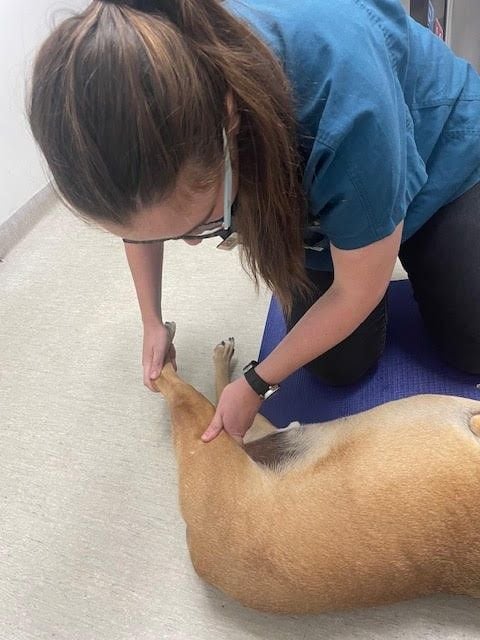
Passive Range of Motion (PROM)
From Day 4 post-op (fentanyl patch removal visit)Lie your dog on their side with the affected limb facing up, completely relaxed. Warm the muscles with gentle stroking and patting. Supporting the limb above and below the joint, gently flex it through its comfortable range and hold for 1-2 seconds, then extend it and hold for 1-2 seconds. The end of each movement should feel soft and comfortable, never any crunching or pain. Repeat 10-20 times.
Slow Lead Walking
Start with 5 minutes from 14 days post-opOn a short lead and a non-slip surface (grass or carpet), walk your dog slowly so they properly weight-bear on the affected limb and don't “skip” off it. Build up gradually by increasing the minutes per session.
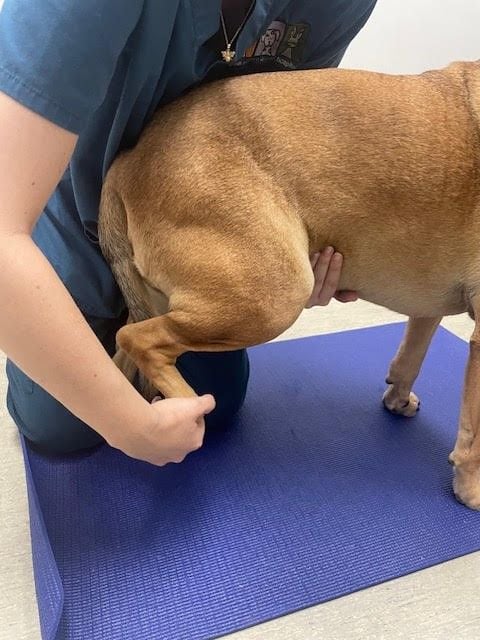
Three-Legged Stand
From 14 days post-opStand your dog on a non-slip mat, supporting under the pelvis if needed. Lift one paw and gently curl the toes under into flexion, bending the joints as much as is comfortable. How long they hold it depends on their strength. Repeat on all four limbs. Progress by holding longer, reducing pelvic support, and adding repetitions.
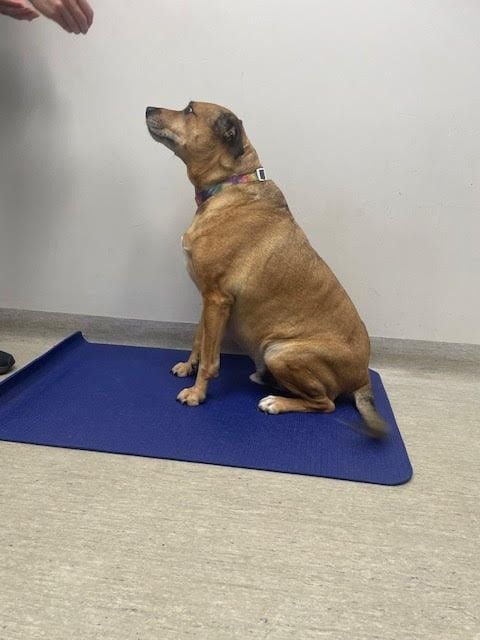
Sit / Stand
From 6 weeks post-opWith your dog standing square, use a treat to encourage them to sit, making sure they sit “square” (not rolling onto one hip - having the sore leg close to a wall helps). Then use a treat to encourage them back up into a square stand. Progress by adding repetitions, and later doing it on a gentle slope facing uphill.
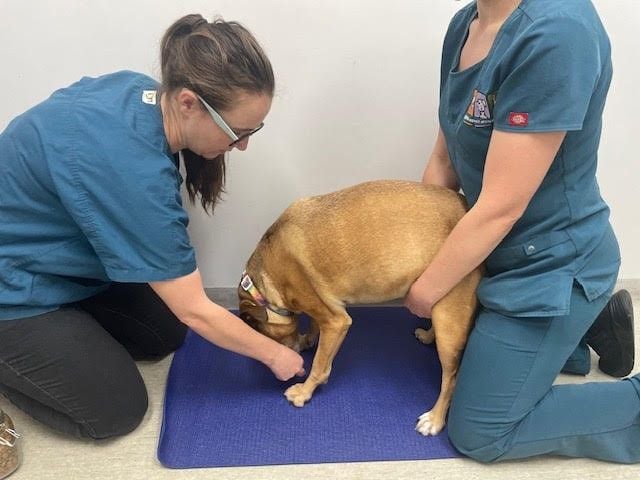
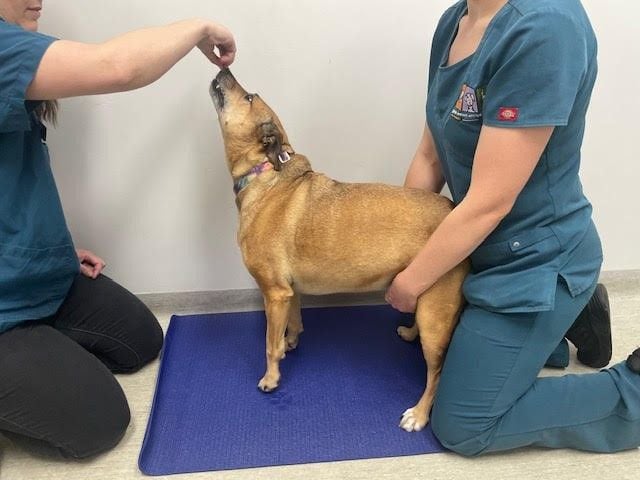
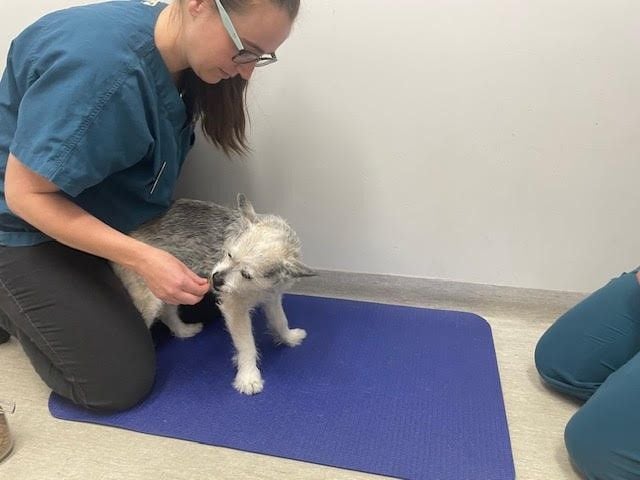
Treat Stretches
From 6 weeks post-opWith your dog standing square and their back end blocked by your body, hold a treat and slowly move it towards their hip so they bend to reach it. Stretch both sides. Then stretch up and down by moving the treat up towards the sky, then down to the ground and back between the legs. A large dog will need an assistant to steady them from behind; a small dog can usually be done solo.
If you're unsure about any exercise, or your dog seems sore or reluctant, please call us on 9631 9322. We're always happy to run through the techniques with you.